
Tropical fire ant
Solenopsis geminata
Description
How to identify
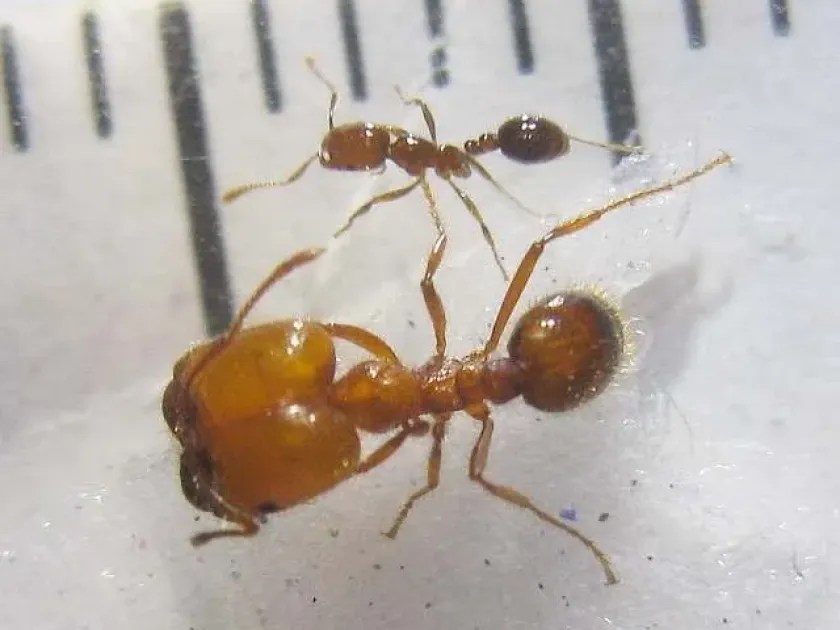
The tropical fire ant (Solenopsis geminata) belongs to the Formicidae family and the Hymenoptera order. These ants are known for their polymorphic nature, with workers ranging from 2.5 to 6 mm in length.
Their color typically ranges from yellowish-brown to dark reddish-brown. They possess a powerful sting that delivers an alkaloid venom, causing a painful burning sensation which is their trademark defensive behavior.
They establish colonies in soil mounds, often located in sunny, disturbed areas. The presence of multiple queens in a single nest allows for rapid population growth and successful colonization of new habitats.
The life cycle proceeds through complete metamorphosis: egg, larva, pupa, and adult. Due to their high reproductive rate, they can quickly dominate an agricultural landscape.
Being an invasive species, they are highly adaptive and are capable of outcompeting local ant species, which disrupts the natural balance within the agricultural ecosystem.
What it damages
Solenopsis geminata causes significant economic losses by damaging a wide range of crops, including corn, soybean, sorghum, and various fruits, primarily by consuming seeds before germination.
Beyond seed consumption, they engage in a mutualistic relationship with honeydew-secreting insects like aphids and mealybugs. They protect these pests from predators, leading to explosive pest population growth.
This protection allows aphids and mealybugs to suck plant sap intensively, which weakens the host plant, stunts its growth, and makes it susceptible to secondary fungal or viral diseases.
In many cases, the ants build nests directly in the root zone, causing mechanical damage to root systems and interfering with water and nutrient uptake, leading to plant death.
Additionally, their presence interferes with field operations. Their aggressive biting and stinging behavior makes manual weeding, harvesting, and other labor-intensive field tasks difficult for farm workers.
Signs of infestation
The primary sign of an infestation is the appearance of soil mounds or disturbed earth near the base of crop plants or along the edges of agricultural rows.
Farmers can observe distinct ant trails leading to foliage, where they actively farm and protect colonies of aphids, leading to visible clusters of these sap-sucking insects on plant stems.
Poor seed germination and emergence are classic signs of heavy infestation, often caused by ants penetrating the soil and removing the seed embryo shortly after planting.
The presence of wilting, chlorosis, and stunted plant growth, combined with high densities of honeydew-producing pests, indicates an underlying ant management issue.
Finally, direct observation of aggressive, brownish ants that swarm when their nest or host plant is disturbed serves as a clear indicator of a Solenopsis geminata colony.
Control measures
The most effective strategy involves the use of slow-acting toxicant baits. Foraging workers carry the bait back to the mound, ultimately neutralizing the queens and collapsing the entire colony.
Soil treatment with appropriate insecticides before planting can protect seeds from ant consumption, ensuring a higher rate of successful crop emergence in affected areas.
Integrated Pest Management (IPM) should focus on reducing the population of associated honeydew-producing insects, which effectively starves the ant colonies of a vital carbohydrate source.
Cultural practices, including regular mechanical tillage and deep plowing, are highly effective in disrupting mound structures and reducing the total number of ants in the field.
Continuous monitoring using traps and field surveys is crucial for identifying infestation hotspots, allowing for targeted application of control measures rather than broad-spectrum treatments.
Taxonomy
- Latin name
- Solenopsis geminata
- Order
- Hymenoptera
- Family
- Formicidae
- EPPO code
- SOLEGE
Discussion
No discussions yet — be the first.