
Turtle ants
Cephalotes
Description
How to identify
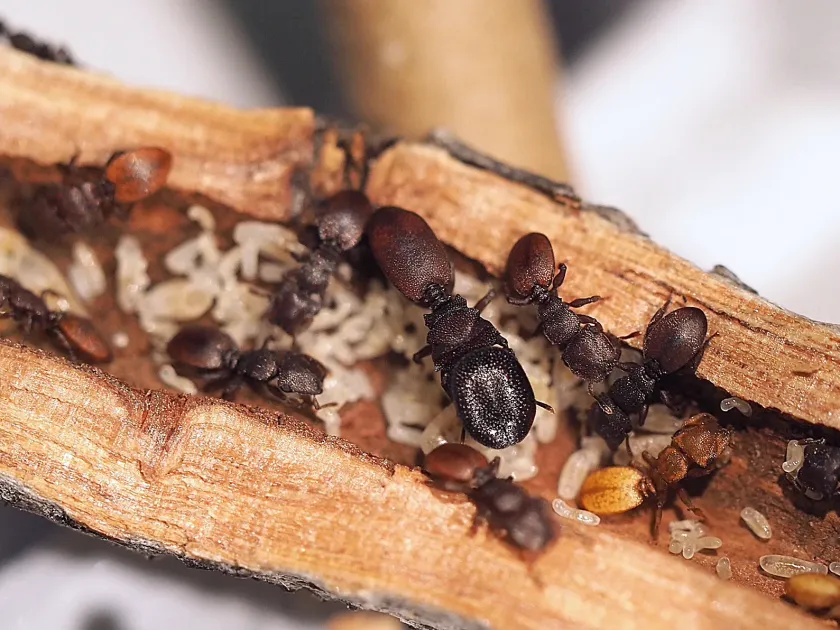
Turtle ants are members of the genus Cephalotes within the Formicidae family. They are widely recognized by their distinctively flattened, armor-like body shape, which earned them their common name.
These insects are highly specialized arboreal dwellers. Their head shape is often modified into a flat disc that allows them to plug the entrance of their nest, protecting the colony from intruders.
Unlike ground-nesting species, they live exclusively in trees, occupying naturally occurring cavities or hollowed-out sections of branches. Their exoskeleton is tough and often textured to match the bark of the trees they inhabit.
One of their unique biological features is the ability to steer while falling from trees. They use their flat body structure and legs to glide, effectively returning to the trunk if they lose their footing.
The colony structure is strictly tied to the health of the host tree, making them unique ecological indicators of wood integrity in their natural habitats.
What it damages
Turtle ants primarily cause damage by expanding existing cavities within tree trunks or branches. This activity can weaken the structural integrity of the wood, making branches prone to snapping under stress.
While not direct consumers of the plant tissue, their nesting activity promotes the accumulation of moisture and fungal spores, which accelerates wood decay and can introduce pathogens to healthy parts of the tree.
In managed orchards, the presence of large colonies can stress the plant, leading to stunted growth or reduced fruit yield due to the disruption of internal transport vessels in heavily infested branches.
They also facilitate secondary infestations by creating paths into the heartwood, which opportunistic borers or pests can later exploit to cause more extensive damage.
The economic impact is mostly indirect, resulting from the loss of tree longevity and the necessity for corrective pruning to remove infested, weakened structural elements.
Signs of infestation
The most reliable sign of an infestation is the presence of fine wood frass (sawdust) accumulating in bark crevices or at the base of the tree, which indicates active cavity expansion.
Visual observation of round entrance holes in the bark, often occupied by the flat head of a soldier ant, is a clear indicator that a mature colony is established inside.
Affected branches often show signs of decline, such as yellowing leaves or a loss of turgor, resulting from the damage caused to the cambium or conducting vessels by the internal gallery work.
- Presence of sawdust or wood debris on the tree bark.
- Small, perfectly round holes in the trunk or branches.
- Specific movement patterns of ants that stay within bark textures.
- Hollow sound when tapping on the affected wood area.
During twilight, one might observe workers moving in a line along branches; however, these ants are generally cryptic and avoid open exposure, preferring to stay hidden.
Control measures
Sanitation is the most effective approach. Pruning and disposing of branches that show signs of hollowing or decay is often sufficient to remove the colony entirely from the orchard.
For large trees, injecting insecticide gels or contact dust directly into the nest entrance is highly effective, as the material can reach the queen and internal brood chambers.
Sealing wounds and pruning cuts with horticultural wax prevents future colonization, as these ants frequently seek out existing openings to start their nesting activities.
Preventative trunk sprays using pyrethroid-based insecticides can create a barrier, discouraging foraging workers from establishing new nests in the protected wood.
Maintaining overall tree vigor is essential. Healthy trees with fewer cracks and decay points are significantly less likely to be chosen as a nesting site by Turtle ants.
Taxonomy
- Latin name
- Cephalotes
- Order
- Hymenoptera
- Family
- Formicidae
- EPPO code
- CEPTSP
Discussion
No discussions yet — be the first.