
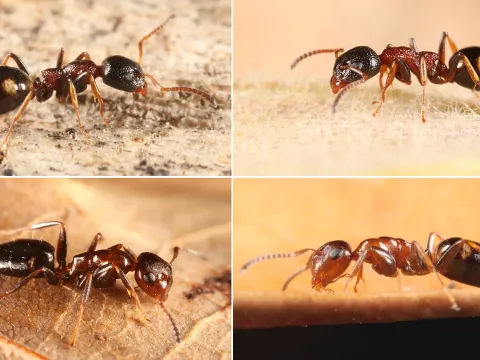
Dolichoderus ant
Dolichoderus
The genus Dolichoderus belongs to the Formicidae family within the Hymenoptera order. These ants are easily recognized by their unique, somewhat angular, and sculpted thoracic structure, which distinguishes them from many other species.
What the section contains
Dolichoderus ant
A key diagnostic feature is the absence of a stinger, which is characteristic of the Dolichoderinae subfamily. Instead, they rely on specialized glands that produce pungent defensive chemicals, often described as having a sweet or musty odor.
Worker ants are typically dark-colored, ranging from brownish to black. Their bodies are protected by a hard chitinous exoskeleton, and their antennae consist of 12 segments, which is a critical detail for identification under magnification.
These ants prefer to build their colonies in woody debris, under the bark of decaying trees, or in the soil near plant roots. Unlike mound-building ants, they often select protected niches within forest litter or rotting wood.
In garden settings, they establish organized trails moving toward food sources. While they may resemble common black garden ants, their anatomy is visibly more structured, particularly around the thorax and petiole areas.
The primary concern regarding Dolichoderus ants is their mutualistic relationship with sap-sucking pests, especially aphids and mealybugs. The ants actively patrol these colonies, shielding them from natural predators like ladybugs.
By relocating aphids onto fresh plant shoots, these ants facilitate the rapid spread of infestations. Plants suffer from significant sap loss, leading to leaf curling, stunted growth, and decreased overall vigor.
Indirect damage occurs through the accumulation of honeydew secreted by aphids. This sugary substance promotes the growth of sooty mold, which covers leaves in a black layer, effectively blocking sunlight and inhibiting photosynthesis.
Although the ants do not typically feed on plant tissues themselves, they may cause mechanical damage to flower buds and young growth while foraging for nectar. Sometimes, they pierce delicate stems to access sugary exudates.
High ant populations often lead to severe plant stress. Weakened plants become more susceptible to secondary infections and viral diseases that are frequently vectored by the aphids protected by the ants.
The activity of Dolichoderus ants is heavily influenced by soil and air temperatures. Following the winter diapause, worker ants emerge as soon as the ground warms up, typically in early spring.
Population activity peaks in early summer, coinciding with the rapid reproduction of aphid colonies. During this period, the ants are highly dedicated to their role as bodyguards for their mutualistic partners.
During the peak of mid-summer heat, activity may stabilize or slightly decrease, yet the ants continue their foraging cycles consistently throughout the day and into the cooler evening hours.
As autumn temperatures drop, the ants prepare for hibernation. They migrate toward deeper soil layers or deeper into rotting logs, where they remain dormant until the following spring season.
The developmental cycle involves multiple generations per season. Queens continue to lay eggs during warmer months, ensuring a steady supply of worker ants to maintain the security of their aphid colonies.
A clear indicator of their presence is the formation of consistent trails on the trunks of fruit trees and ornamental shrubs. Ants move in orderly columns, often exhibiting heavy traffic toward the canopy.
Curled leaves on young shoots almost always signal the presence of aphids protected by ants. Observing the ants "stroking" the aphids with their antennae is a definitive sign of an active mutualistic relationship.
The development of sticky honeydew followed by a dark sooty mold on the foliage is a critical sign of a long-term infestation. This indicates that the ant-protected aphid population has reached a damaging level.
The premature wilting or drying of flower buds and the presence of fine soil particles at the base of plants can indicate nesting sites nearby. This suggests the colony is well-established in the immediate root zone.
If the ants display aggression, scurry rapidly when a branch is touched, or release a distinct odor, this confirms their active territorial defense of the feeding site on your plants.
The most effective management strategy involves disrupting the ant-aphid partnership. Applying sticky barrier bands to tree trunks physical blocks ants from reaching the canopy, leaving aphids vulnerable to natural predators.
Controlling the aphid population with systemic insecticides effectively starves the ants of their primary food source, forcing them to relocate. Timely application during the early stages of infestation is key to success.
Using boric acid-based bait stations is highly effective for colony control. Workers carry the poisoned bait back to the nest, resulting in the elimination of the queen and the eventual collapse of the entire colony.
Regular soil cultivation around the base of plants disturbs nest structures and encourages the colony to move elsewhere. Planting repellent herbs like mint or tansy may offer minor deterrent effects.
When chemical intervention is necessary, select targeted insecticides that are safe for pollinators. Always strictly follow label instructions to minimize environmental impact and protect beneficial garden insects.