
Crematogaster brevispinosa
Crematogaster brevispinosa
Description
How to identify
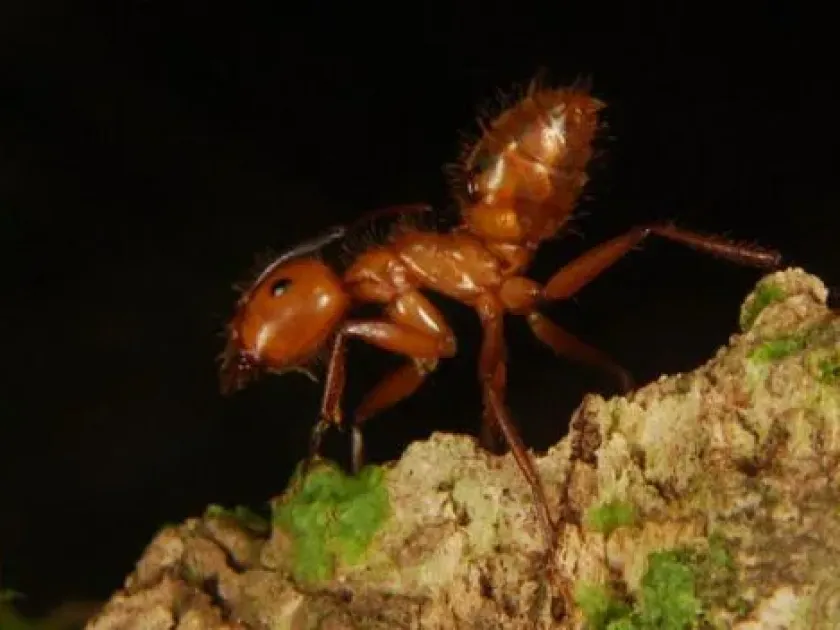
Crematogaster brevispinosa is a species of ant belonging to the subfamily Myrmicinae. It is widely recognized by its heart-shaped abdomen, which can be raised over the thorax in a threatening posture.
The workers typically display reddish-brown to dark brown coloration. A distinguishing feature is the presence of short, sharp spines on the thorax, which are key diagnostic traits for field identification.
These ants are primarily arboreal, often establishing their colonies in existing cavities of trees, rotting wood, or under the bark. They are known for their highly organized social foraging patterns.
The life cycle follows the typical holometabolous development: eggs, larvae, pupae, and adult ants. The brood is intensively cared for by worker ants, which relocate larvae based on temperature and moisture needs.
Their biological success is closely linked to their ability to herd and defend sap-sucking insects like mealybugs and scale insects. This mutualistic relationship is central to their ecological behavior.
What it damages
The primary economic damage caused by Crematogaster brevispinosa is indirect. By protecting honeydew-producing insects from natural predators and parasitoids, they cause massive outbreaks of pests.
Crops such as coffee, cocoa, and citrus fruits are heavily impacted. The presence of mealybugs protected by these ants leads to severe nutrient depletion and plant stress.
The accumulation of honeydew on foliage provides a perfect substrate for the growth of sooty mold. This fungus blocks sunlight, significantly reducing the efficiency of photosynthesis in the plant.
Plant development is frequently stunted, and yield quality drops because the insects suck essential sap from the plant tissues, leading to leaf distortion and fruit drop.
In some agricultural settings, the nesting behavior of these ants can physically weaken young twigs and branches, especially when they excavate galleries for their nest systems.
Control measures
Control strategies for Crematogaster brevispinosa must focus on disrupting their association with sucking insects. Reducing the population of scale insects is the first step.
The application of slow-acting toxic baits is highly effective, as it allows the worker ants to transport the insecticide into the nest, ultimately eliminating the entire colony.
Installing physical barriers, such as sticky bands around tree trunks, is an excellent non-chemical method to prevent ants from ascending to the canopy to feed.
Regular agricultural practices, including pruning and the removal of infected plant materials, reduce the nesting sites available for these ants within the orchard.
Integrated Pest Management (IPM) programs should prioritize biological controls, such as preserving natural enemies of mealybugs, which helps restore the balance and makes the trees less attractive to the ants.
Taxonomy
- Latin name
- Crematogaster brevispinosa
- Order
- Hymenoptera
- Family
- Formicidae
- EPPO code
- CREMBR
Discussion
No discussions yet — be the first.