
Dolichoderus attelaboides ant
Dolichoderus attelaboides
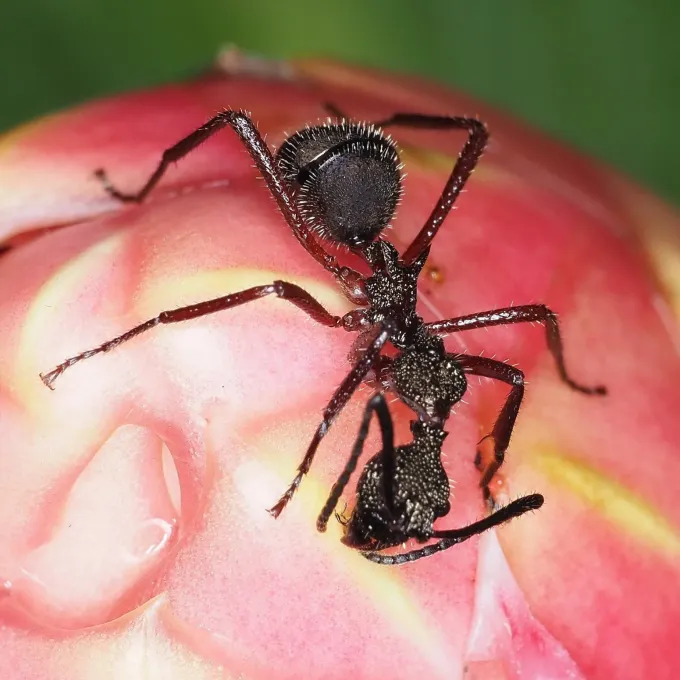
Description
How to identify
The ant Dolichoderus attelaboides belongs to the family Formicidae, subfamily Dolichoderinae. This species is easily recognizable by its unique morphology, particularly the thorax which features distinct spine-like protrusions.
The overall body color is dark, and the exoskeleton is relatively robust, allowing these ants to navigate through rough bark and vegetation with ease.
Worker ants are the most commonly observed members of the colony and are highly active during the day, maintaining structured trails across infested plants.
The species exhibits a distinct form compared to other ants in the genus, which makes it a specific object of study for agronomists dealing with woody plant pests.
They do not always form traditional underground mounds, often preferring to utilize existing crevices or hollows within the woody parts of trees and shrubs.
What it damages
The primary damage caused by these ants is indirect, resulting from their mutualistic relationship with aphids, scale insects, and other honeydew-producing pests.
By protecting these sap-sucking insects from natural predators like ladybirds and lacewings, the ants facilitate an explosive population growth of the primary pests.
As the aphids thrive under ant protection, they extract significant sap from the plant, leading to stunted growth, leaf curling, and overall plant decline.
The accumulation of honeydew secreted by aphids promotes the development of sooty mold, which coats the leaves and hinders photosynthesis.
In some cases, the ants themselves may physically damage young buds or bark while constructing their transit paths or temporary shelters, allowing pathogens to infect the plant.
Signs of infestation
A continuous trail of ants traveling up and down the stems of trees or garden plants is the most obvious sign of an established colony.
The presence of sticky honeydew on the foliage and the subsequent appearance of black sooty mold are clear indicators that aphids are being farmed by ants.
Wilting of leaves and the deformation of young shoots are symptomatic of intense sap-sucking pest infestation supported by ant activity.
Visible trails or small entry points into the bark or woody stems indicate that the ants are using the plant as a nesting or staging area.
Increased presence of natural enemies might be absent in areas where ants are aggressively protecting their prey, which is a key observation for biological control experts.
Control measures
Effective management requires a twofold approach: eliminating the aphids to starve the ants and applying barriers to stop ant movement.
Systemic insecticides or horticultural oils used against aphids are critical, as they remove the primary food source that attracts the ants to the host plants.
Applying physical barriers like sticky tree bands prevents workers from reaching the canopy, thereby forcing a reduction in the aphid population.
Bait stations containing slow-acting toxic gels are highly efficient, as the worker ants carry the bait back to the nest, effectively neutralizing the queen and the colony.
- Regular application of systemic pesticides to control aphid outbreaks.
- Deployment of sticky bands on tree trunks to interrupt traffic.
- Strategic use of toxic baits for colony eradication.
Taxonomy
- Latin name
- Dolichoderus attelaboides
- Order
- Hymenoptera
- Family
- Formicidae
- EPPO code
- DOLSAT
Discussion
No discussions yet — be the first.