
Cuban leafcutter ant
Atta insularis
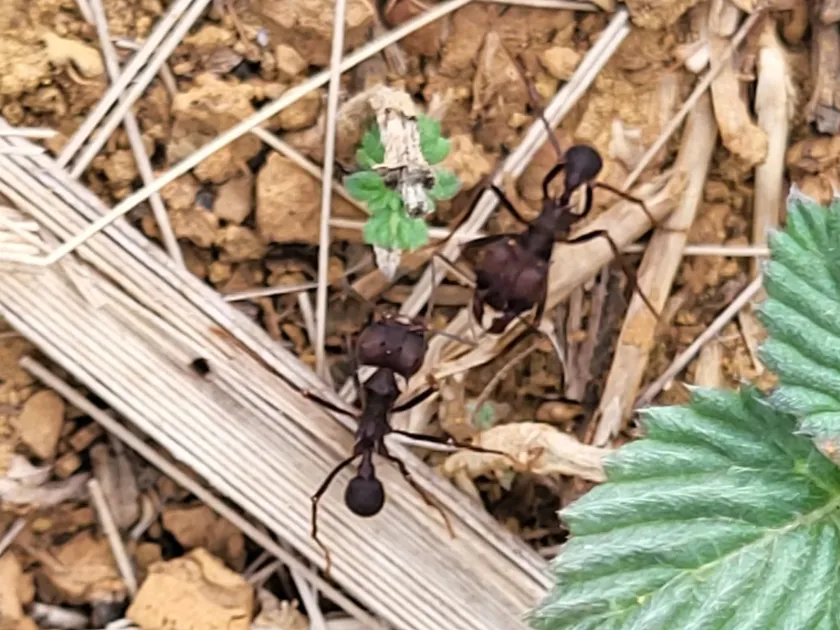
Description
How to identify
Atta insularis is a prominent species of leafcutter ant endemic to Cuba. They are well-known for their complex social structure and their ability to significantly impact local vegetation through mass defoliation.
The colony consists of different castes, including small workers tending the fungus, and larger soldiers with robust mandibles capable of cutting tough leaf tissues. This division of labor is essential for the survival and expansion of their massive underground nests.
These ants construct elaborate subterranean tunnel systems that can extend deep into the soil. The entrance to a nest is typically marked by large, characteristic soil mounds created by the excavation work.
Their life cycle revolves around a unique symbiotic relationship with fungi. They do not consume the leaves themselves; instead, they process the leaf material into a substrate to cultivate the fungus that serves as the colony's primary food source.
The queen can live for over a decade, producing millions of offspring and ensuring that the colony remains a persistent threat to the surrounding agricultural landscape for years.
What it damages
The Cuban leafcutter ant is considered a major agricultural pest, capable of stripping entire fields of crops overnight due to the large size of their colonies.
Favored targets include citrus, tobacco, coffee, cocoa, and various legumes. Heavy defoliation reduces the photosynthetic capacity of the plants, leading to severe stress, stunted growth, and significant yield losses.
Damage is characterized by precise, semicircular cuts on the edges of leaves. In severe cases, the ants may leave plants completely bare, exposing them to secondary infections and sunscald.
Beyond leaf consumption, the activity of these ants can disturb the soil structure around root systems as they deposit leaf debris in deep underground chambers.
Young nursery stock is especially vulnerable, as the loss of foliage often results in the death of the sapling, making recovery impossible without sufficient energy reserves.
When it appears
These ants are active throughout the year in the tropical climate of Cuba, but foraging intensity increases significantly during the wet season.
Temperature and humidity play a critical role in their behavior. During the hottest parts of the day, ants often restrict their activities to nighttime or crepuscular periods to prevent desiccation.
The demand for fresh substrate for their fungus gardens drives the seasonal cycle of foraging. As the fungus garden grows, the need for green material increases, leading to more aggressive feeding patterns.
Growers should maintain a consistent monitoring schedule, particularly during the rainy season, when colony expansion is at its peak and the potential for crop damage is highest.
Observations should be focused on identifying new ant trails early, as prompt intervention can prevent the establishment of permanent pathways to valuable crop rows.
Signs of infestation
The most visible sign of an infestation is a clear, wide trail (up to 15 cm) leading from the nest to the foraging area, kept completely free of debris and weeds by the ants.
Look for semicircular cuts on the margins of leaves. Fragments of leaves dropped along the trail also indicate that an active colony is nearby.
Fresh soil mounds or craters are a clear indicator of active tunneling and nest expansion. These mounds are often located within or near the most damaged sections of the field.
Sighting columns of workers carrying leaf fragments overhead is a definitive sign of Atta insularis activity in the area.
In the evening, using a light to trace the movement of foragers often leads directly to the primary entrance of the underground colony.
Control measures
Effective management requires targeting the queen within the nest, as killing only the workers will not prevent the colony from continuing its activity.
The most successful agricultural method involves the use of toxic, granulated baits. These are designed to be collected by workers and brought into the nest, where they eventually inhibit the fungus garden and eliminate the queen.
For high-value trees, physical barriers such as sticky bands or specialized chemical-treated wraps can prevent ants from climbing and reaching the canopy.
- Application of systemic insecticides directly into the tunnel system.
- Use of biological control agents, such as specific entomopathogenic fungi.
- Removal of non-crop vegetation surrounding fields to break ant trails and limit food availability.
Integrated Pest Management (IPM) strategies, combining periodic nest monitoring with bait applications, are the most sustainable approach for large-scale crop protection.
Taxonomy
- Latin name
- Atta insularis
- Order
- Hymenoptera
- Family
- Formicidae
- EPPO code
- ATTAIN
Discussion
No discussions yet — be the first.