
Dorylus
Dorylus
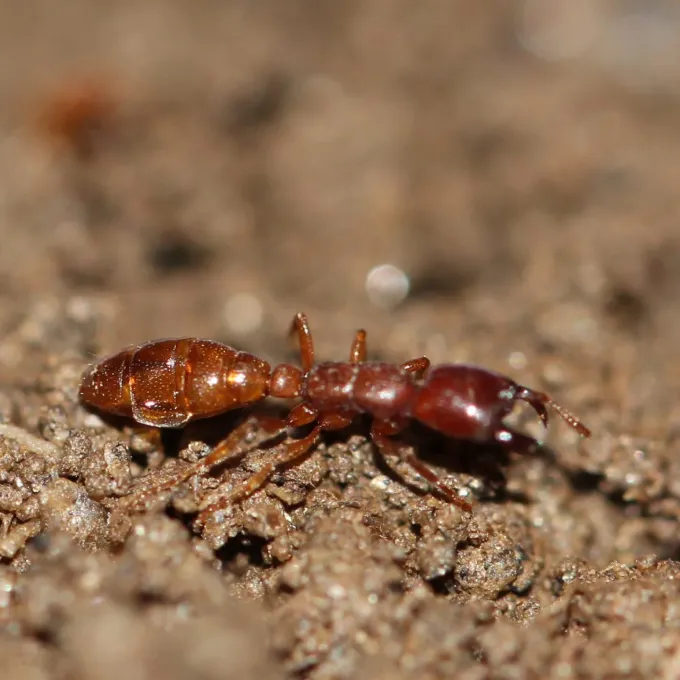
Description
How to identify
Dorylus is a genus of army ants, commonly known as driver ants, native primarily to tropical Africa and Asia. They are famous for their nomadic behavior and aggressive hunting style.
These ants do not build permanent nests. Instead, they form temporary camps known as bivouacs, using their own bodies to protect the queen and the brood.
The colony structure is highly organized, with different castes of workers. Large major workers have powerful mandibles used for defense and dismantling prey.
Lacking functional eyes, they rely heavily on pheromone trails to navigate and communicate within the colony, making them incredibly efficient predators.
For agronomists, identifying Dorylus involves recognizing their distinct marching columns, which can contain hundreds of thousands of individuals moving in unison.
What it damages
Dorylus ants are primarily predatory and do not feed on plant tissues directly. However, they can cause significant indirect damage to agricultural crops.
During their foraging expeditions, they dig extensive tunnel systems in the soil, which can disturb the root structures of seedlings and young plants.
The mechanical damage caused by their burrowing can leave roots exposed to the air, causing plants to wilt or die due to water stress and nutrient deficiency.
While they feed on soil-dwelling pests, their aggressive foraging can lead to the displacement of beneficial soil microorganisms and arthropods essential for soil health.
In rare cases, if a bivouac is established near high-value nursery plants, the sheer concentration of ants can stress or kill the plants due to disturbance.
When it appears
The activity of Dorylus is not strictly seasonal in the temperate sense; it is largely governed by the colony's reproductive cycle and local rainfall patterns.
Increased movement is often observed during the wet season, as softer soil allows for easier burrowing and hunting, and higher prey activity attracts the colony.
In dry conditions, colonies tend to retreat deeper into the ground to maintain moisture levels, making their presence less obvious to field observers.
The nomadic phase, where the colony constantly moves, alternates with stationary phases for brood development, which influences the frequency of crop interaction.
Farmers should monitor their fields during periods of high humidity and prey abundance, as these are the times when Dorylus are most likely to be active.
Signs of infestation
The most prominent sign is the presence of dense, highly organized columns of ants traversing the soil surface, often covering large areas of the field.
A sudden, widespread disappearance of surface-dwelling insects and soil invertebrates indicates that a Dorylus raiding party has passed through the area.
Visible surface disturbance, such as small soil mounds or tunnels leading to root zones, suggests that the colony is actively searching for food underground.
Plants showing signs of sudden wilting or leaning, despite adequate irrigation, may have had their root systems undermined by colony activity.
During the stationary phase, a large, pulsating mass of ants can often be found under dense debris, leaf litter, or in natural depressions in the field.
Control measures
Effective management of Dorylus usually involves non-chemical deterrents, as they are a transient species and rarely stay in one area for long.
Creating physical barriers, such as deep trenches or cultivated strips, can help disrupt the pheromone trails and redirect the colony away from sensitive crops.
Maintaining high soil moisture through proper irrigation may discourage them from digging too deeply near delicate seedling root zones.
In extreme cases, the application of essential oil-based repellents can provide temporary protection for high-value nursery beds or experimental plots.
Ultimately, the best strategy is often patience; since these ants are nomadic, a colony will typically pass through an area within a few days without permanent damage.
Taxonomy
- Latin name
- Dorylus
- Order
- Hymenoptera
- Family
- Formicidae
- EPPO code
- DORLSP
Discussion
No discussions yet — be the first.