
Dorymyrmex bicolor
Dorymyrmex bicolor
Description
How to identify
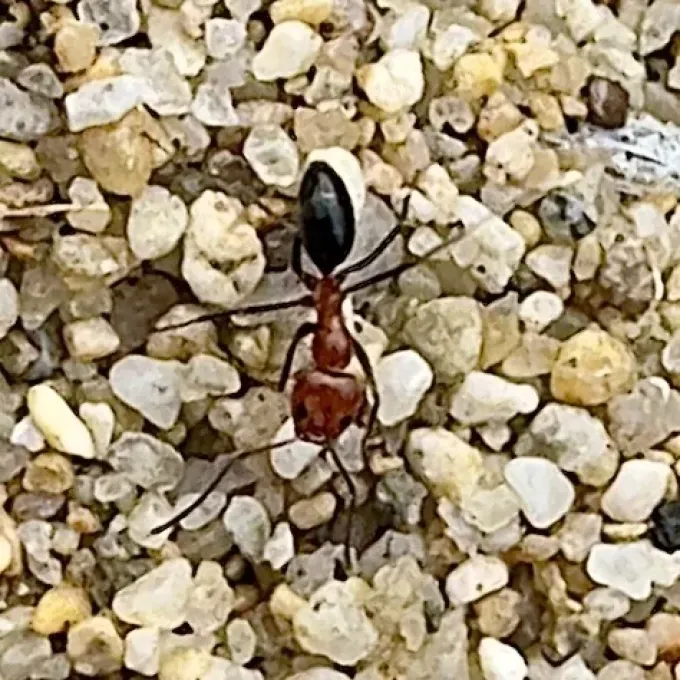
Dorymyrmex bicolor, commonly referred to as the bicolor cone ant, is a species of the Formicidae family. Adult individuals are characterized by a distinct bicolored appearance: the head and thorax are usually a darker reddish-brown, while the abdomen is a striking black.
Worker ants are known for their high speed and aggressive defensive behavior when their nests are disturbed. Typically ranging from 3 to 5 mm in length, these ants have slender bodies adapted for movement in arid environments.
Systematically, this species belongs to the Dolichoderinae subfamily. They are well-known for building nests in soil, often constructing recognizable craters of sand or dirt around the nest entrance, which makes their colonies easily visible in open areas.
Unlike many other species, these ants rely heavily on chemical communication. When threatened, workers release specific pheromones that act as an alarm system, alerting the entire colony to potential intruders or territory violations.
Identification is aided by the clear color contrast on their bodies, which is visible even to the naked eye under good lighting, distinguishing them from other members of the Dorymyrmex genus.
What it damages
The primary damage caused by Dorymyrmex bicolor is indirect, stemming from its relationship with sap-sucking insects. These ants actively tend and protect aphids and scale insects from predators, ensuring a steady supply of honeydew for the colony.
This symbiotic relationship results in a significant increase in aphid populations on garden and orchard crops. Consequently, plants suffer from nutrient depletion, leading to stunted growth, reduced vigor, and lower overall yields.
Beyond protecting aphids, the ants' nesting activity in the root zone can physically damage young plants. By excavating tunnels, they disrupt soil structure and create air pockets, which can lead to root desiccation and instability.
This pest often favors nesting in areas where crops are grown, as these locations provide optimal conditions for "herding" aphids. Their presence makes them an unwanted guest in vegetable patches and young orchards.
Furthermore, indirect harm occurs through the transmission of fungal pathogens between plants. As ants move aphid colonies from one plant to another, they effectively spread diseases, accelerating infections throughout the garden.
When it appears
The activity level of Dorymyrmex bicolor is directly linked to soil and ambient temperatures. In their native ranges, they are most active during the warmer months, typically from late spring through early autumn.
Peak activity occurs during hot, dry periods when the ants are most engaged in foraging. During this time, they are highly visible on the soil surface surrounding their crater-like mounds.
During the winter, the ants retreat deep into the soil, entering a state of diapause. The depth of their nests provides protection against extreme temperature fluctuations and moisture loss during the colder months.
Activity resumes with the arrival of the first sustained warm days of spring. Following the winter dormancy, the colony has a high energy demand, which drives them to intensify their aphid-tending behavior to secure food resources.
The seasonal cycle also includes a mating flight period, usually occurring in mid-summer, when environmental conditions are optimal for the establishment of new colonies by young queens.
Signs of infestation
The first sign of an infestation is the presence of characteristic cone-shaped mounds of soil or sand surrounding nest entrances. These nests are often found in open, sunny patches of earth.
A mass infestation is often signaled by distinct "ant trails" running along tree trunks, shrub branches, or vegetable stems. The ants use these constant pathways to move between their nest and aphid colonies.
Finding large populations of aphids on young leaves or buds, which are actively guarded by ants, is a clear indicator that the Dorymyrmex bicolor colony is managing the plant's pests.
Gradual wilting of plant tips and curling of leaves, caused by aphid feeding, serve as indirect symptoms indicating that these ants are likely present and facilitating the damage.
Evidence of small holes and voids in the soil immediately around the base of plants can also indicate that the ants have established their subterranean tunnels within the root zone of your crops.
Control measures
Effective management of Dorymyrmex bicolor requires a dual approach: targeting both the ants and the pests they protect, such as aphids. Systemic insecticides are recommended for the treatment of infested plants.
To restrict ant access to tree canopies, sticky banding or adhesive traps should be applied to trunks. This prevents the ants from reaching the aphids and protecting them from natural predators.
Mechanical destruction of the mounds followed by soil drenching with pyrethroid-based products can reduce the worker population. However, it is essential to consider that nests can extend deep underground.
Biological control involves encouraging natural aphid predators like ladybugs and lacewings. Once the aphid population is significantly reduced by these predators, the ants will lose their primary food source and may migrate elsewhere.
Regular cultivation and loosening of the soil in vegetable rows and around tree bases serve as effective preventative measures. This disrupts the ants' tunnels and mound architecture, making the environment less suitable for colony survival.
Taxonomy
- Latin name
- Dorymyrmex bicolor
- Order
- Hymenoptera
- Family
- Formicidae
- EPPO code
- DRMXBI
Discussion
No discussions yet — be the first.