
Dorymyrmex
Dorymyrmex
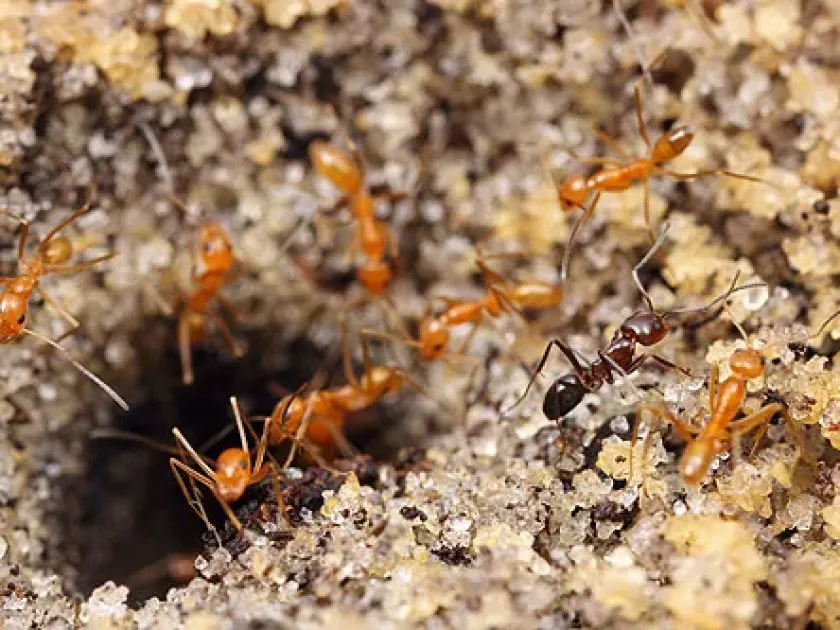
Description
How to identify
Dorymyrmex is a genus of ants within the Formicidae family, specifically the Dolichoderinae subfamily. These ants are widely recognized for their high agility and their defensive behavior when their colonies are disturbed.
Morphologically, they possess a distinct body structure often characterized by a single petiole node. Their coloration typically ranges from light yellow to dark brown, providing excellent camouflage in sandy and open soil environments.
A defining biological trait of the Dorymyrmex genus is the presence of specialized glands that produce volatile chemical signals. These scents allow the colony to rapidly communicate danger and recruit workers to defend their territory.
Their natural habitat consists of open, sunny, and often arid landscapes. They are known for constructing crater-like or mound-shaped entrances to their underground nests, often utilizing loose soil particles.
The colony cycle is typical for ants, involving a queen that lays eggs, which develop through larval and pupal stages. The entire growth process is highly dependent on environmental temperatures and soil conditions.
What it damages
The primary agricultural impact of Dorymyrmex stems from their mutualistic relationship with sap-sucking pests, particularly aphids and mealybugs. The ants actively herd and protect these insects from natural predators.
By providing protection, the ants ensure the survival and proliferation of aphid colonies on valuable crops. This leads to severe sap loss, leaf deformation, and a significant reduction in the overall vigor of the plants.
The accumulation of honeydew secreted by the aphids facilitates the growth of sooty mold. This dark fungal growth coats the foliage, effectively blocking sunlight and inhibiting photosynthesis, which ruins plant health.
During nest construction, these ants can physically disturb the root systems of young seedlings. This root exposure to air and potential excavation can lead to the wilting and death of vulnerable young plants.
Furthermore, their constant movement across the field makes them efficient vectors for various plant pathogens and fungal spores, helping to spread diseases from infected plants to healthy ones.
When it appears
Dorymyrmex activity is highly seasonal, peaking during the warmer spring and summer months when soil temperatures are ideal for their metabolic and reproductive processes.
Spring marks the beginning of colony expansion, as workers emerge to forage and establish new paths to food sources. This is when they are most likely to begin protecting aphid populations on emerging vegetation.
During the peak of summer, ant activity is at its maximum. They are constantly moving between the nest and plants to collect honeydew, ensuring that their aphid "livestock" remains safe from ladybugs and other predators.
As autumn approaches and temperatures drop, the ants gradually decrease their surface activity. They begin to focus on maintaining the interior of their nests for the upcoming colder period.
In winter, Dorymyrmex colonies enter a period of dormancy, moving deep into the soil profile where temperatures remain relatively stable, protected from frost and freezing conditions.
Signs of infestation
The most visible sign of Dorymyrmex presence is the appearance of crater-like mounds of loose sand or fine soil particles at the base of plants or scattered throughout the garden beds.
Direct observation of ant trails is a key indicator. These trails are usually well-defined and lead directly to plant stems or branches occupied by aphids, mealybugs, or scale insects.
Leaves that appear curled, yellowed, or otherwise deformed are standard visual symptoms indicating that a colony of aphids is being protected by these ants in the immediate vicinity.
A sticky, black sooty residue on the stems and leaves of crops is a clear warning sign that the ants have established a stable mutualistic relationship with sap-sucking pests.
Patches of wilting or dying seedlings, combined with excavated soil around the roots, are strong indications that the ants have built their nest too close to your crops.
Control measures
Managing Dorymyrmex requires a multifaceted strategy that addresses both the ant population and the pests they support, such as aphids.
- Deploy slow-acting bait stations containing insecticides that workers carry back to the colony, effectively targeting the queen and brood.
- Use physical sticky barriers on tree trunks to prevent the ants from climbing up and protecting aphids in the canopy.
- Practice frequent soil cultivation in and around garden rows to disrupt their nest structures and discourage permanent colonization.
- Implement integrated pest management for aphids; removing the aphids' honeydew source often encourages the ants to move elsewhere.
- Incorporate repellent plants, such as mint or lavender, around the perimeter to create an environment that the ants find less attractive for nesting.
Taxonomy
- Latin name
- Dorymyrmex
- Order
- Hymenoptera
- Family
- Formicidae
- EPPO code
- DRMXSP
Discussion
No discussions yet — be the first.