
Dark rover ant
Brachymyrmex patagonicus
Description
How to identify
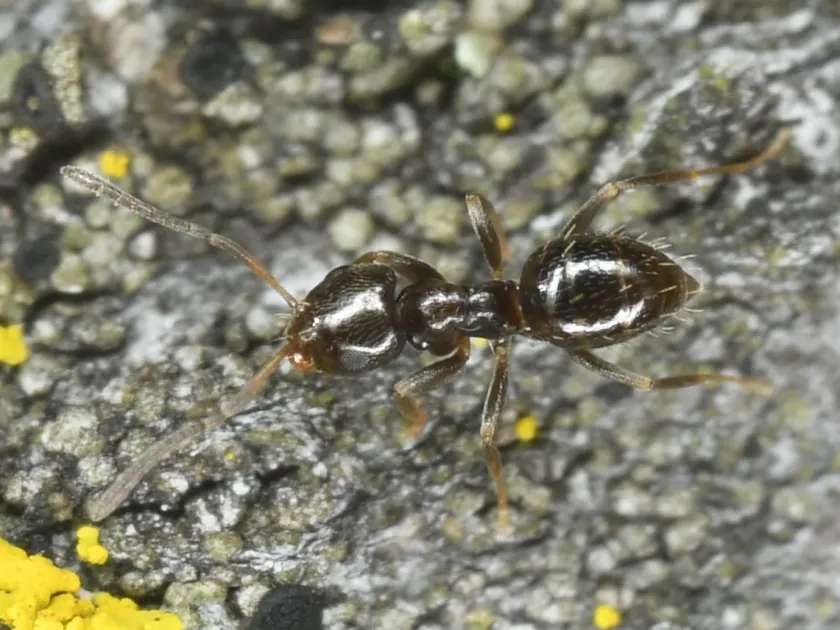
The dark rover ant, Brachymyrmex patagonicus, is a tiny species within the Formicidae family, subfamily Formicinae. Workers are typically 1.5–2 mm long and dark brown in color.
They are characterized by their small size, lack of a sting, and erratic, rapid movement across surfaces, which makes them easily recognizable in the field.
These ants are highly adaptable and form large colonies with multiple queens (polygyny), allowing them to spread rapidly throughout landscapes and greenhouses.
Nests are often cryptic, located in the soil, under mulch, leaf litter, or within decaying wood, making them challenging to locate and eradicate.
The species is a significant invasive threat, known for its ability to quickly colonize disturbed areas and outcompete native ant populations in various environments.
What it damages
The primary agricultural damage caused by dark rover ants is indirect. They form mutualistic relationships with sap-sucking insects like aphids, mealybugs, and scale insects.
By protecting these pests from natural predators such as lady beetles and lacewings, the ants cause a significant increase in the pest population on crops.
This surge in sap-suckers leads to plant stress, stunted growth, leaf curling, and in severe cases, the premature loss of fruits or the death of the plant.
The ants also promote the growth of sooty mold, a fungus that thrives on the honeydew excreted by the aphids, which covers leaves and blocks photosynthesis.
In nursery and greenhouse settings, the ants may disturb soil around root systems by excavating tunnels, which causes roots to dry out and impacts plant nutrient uptake.
When it appears
Dark rover ant activity typically begins in early spring as ground temperatures rise, signaling the emergence of foraging workers from overwintering sites.
Population levels reach their peak during the hot summer months when optimal conditions accelerate brood development and encourage colony expansion.
In greenhouses or controlled indoor environments, they can remain active throughout the year, posing a constant threat to year-round production cycles.
Activity tapers off as temperatures drop in late autumn, though colonies remain prepared to resume foraging if winter conditions are unusually mild.
Their ability to thrive across a broad range of temperatures and moisture conditions contributes to their status as a resilient and persistent pest.
Signs of infestation
A primary indicator of a dark rover ant infestation is the presence of dense, fast-moving trails of ants on plant stems, specifically targeting areas with high aphid populations.
Heavy concentrations of honeydew-producing insects on young shoots and the undersides of leaves are a clear warning sign of active ant tending.
The accumulation of black sooty mold on the foliage is a direct consequence of the ant-pest symbiosis and serves as a visible sign of a heavy infestation.
Small piles of displaced soil at the base of plants or near the crown indicate the presence of tunnels created by the ants during their excavation activities.
The absence of beneficial predatory insects that usually keep aphid populations in check is another red flag indicating that ants are actively protecting the pests.
Control measures
Effective management begins with the control of honeydew-producing pests, such as aphids and mealybugs, which reduces the primary food source for the ants.
The use of sticky barrier tapes on tree trunks and greenhouse posts can prevent ants from accessing the foliage where they tend their associated pests.
Baits containing slow-acting insecticides are highly recommended, as workers carry the toxic materials back to the colony to eliminate the queens.
Sanitation is crucial; removing leaf litter, excess mulch, and debris from around crop bases reduces suitable nesting sites and harborages for the ants.
For high-pressure areas in greenhouses, soil drenching with authorized systemic insecticides can be used to disrupt the colony's underground development.
Taxonomy
- Latin name
- Brachymyrmex patagonicus
- Order
- Hymenoptera
- Family
- Formicidae
- EPPO code
- BRCXPA
Discussion
No discussions yet — be the first.