
Dark rover ant
Brachymyrmex obscurior
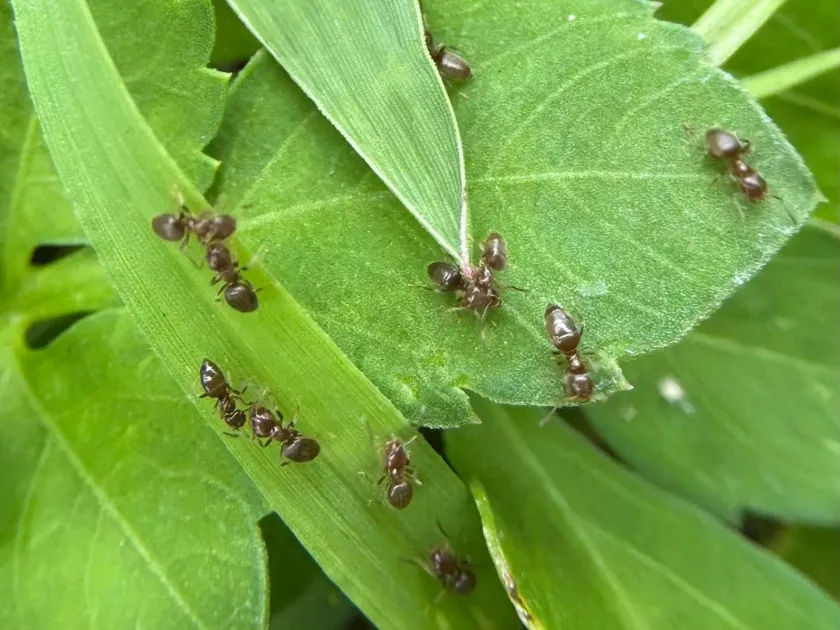
Description
How to identify
The dark rover ant, scientifically known as Brachymyrmex obscurior, belongs to the Formicidae family. They are notably small, with worker ants typically measuring about 1.5 to 2 millimeters in length.
These ants have a soft body that ranges from light to dark brown. Their lack of stings is compensated by their ability to spray formic acid, which they use primarily as a defense mechanism against predators.
They are characterized by a highly polygynous colony structure, meaning a single nest may contain several queens. This feature allows the species to reproduce rapidly and establish new colonies with great efficiency.
Brachymyrmex obscurior prefer humid environments and are commonly found nesting in soil, under rocks, in decaying wood, or within the root systems of agricultural plants.
Their microscopic size allows them to infiltrate greenhouses and indoor plantations easily, making them a difficult pest to monitor and completely eradicate from managed landscapes.
What it damages
The most significant agricultural impact of these ants is their symbiotic relationship with honeydew-producing insects, such as aphids, scale insects, and mealybugs, which they protect from natural predators.
By actively farming these sucking pests, the dark rover ant facilitates the spread of plant viruses and soot mold, which thrives on the honeydew left behind by their protected "livestock."
They can cause indirect damage to seedlings and young plants by nesting in the root zone, creating air pockets that desiccate roots and disrupt the uptake of water and nutrients.
In greenhouses, these ants may directly damage flower buds and succulent plant tissues while foraging for nectar, leading to distorted growth and reduced marketability of ornamental crops.
Their persistent activity in the root zone can weaken the structural integrity of the soil around crops, making plants more susceptible to environmental stress and secondary infections.
When it appears
The activity of Brachymyrmex obscurior increases as soil temperatures rise in the spring, typically becoming noticeable once temperatures exceed 15 degrees Celsius.
Summer represents the peak season for their activity, coinciding with the reproductive cycle of aphids and other sucking insects that provide the ants with a steady supply of honeydew.
As autumn temperatures drop, the ants tend to migrate deeper into the soil or toward the root zones of perennial plants to seek protection from the cold.
In climate-controlled greenhouses or nurseries, these ants remain active year-round, posing a constant threat to year-round production cycles.
Daily activity patterns generally show higher levels of foraging during early morning and late afternoon, avoiding the intense heat of midday.
Signs of infestation
The most reliable sign of an infestation is the presence of consistent trails of ants moving along stems and trunks, leading to colonies of aphids or mealybugs.
A sudden and unexplained increase in aphid populations that is resistant to natural biological control agents often indicates active protection by dark rover ants.
Plants exhibiting signs of wilting or nutrient deficiency, combined with visible ant activity around the base of the stem, often indicate root zone disturbances.
The appearance of sticky, black soot mold on leaves is a definitive symptom of high honeydew accumulation caused by ants protecting sucking insects.
Finding ant nests inside potting soil or near the drainage holes of containerized plants is a clear indicator that a colony has established itself within the greenhouse environment.
Control measures
The most effective strategy involves the use of slow-acting toxic bait gels. These are brought into the nest by workers, eventually killing the queens and collapsing the entire colony.
Control must be holistic, as eliminating the ants is ineffective without simultaneously managing the sucking pests they protect; thus, integrating systemic insecticides is crucial.
Mechanical barriers, such as non-drying sticky resins or physical tapes placed on tree trunks, prevent ants from reaching the canopy and tending to sucking insects.
Improving cultural practices, such as frequent soil cultivation and weed control, makes the environment less hospitable for nest building and foraging.
- Application of bait stations containing slow-acting insecticides.
- Consistent monitoring and management of aphid and scale populations.
- Soil drenching with appropriate systemic insecticides where permitted.
- Removal of debris and alternative nesting sites near high-value crops.
Taxonomy
- Latin name
- Brachymyrmex obscurior
- Order
- Hymenoptera
- Family
- Formicidae
- EPPO code
- BRCXOB
Discussion
No discussions yet — be the first.