
Dorylus orientalis
Dorylus orientalis
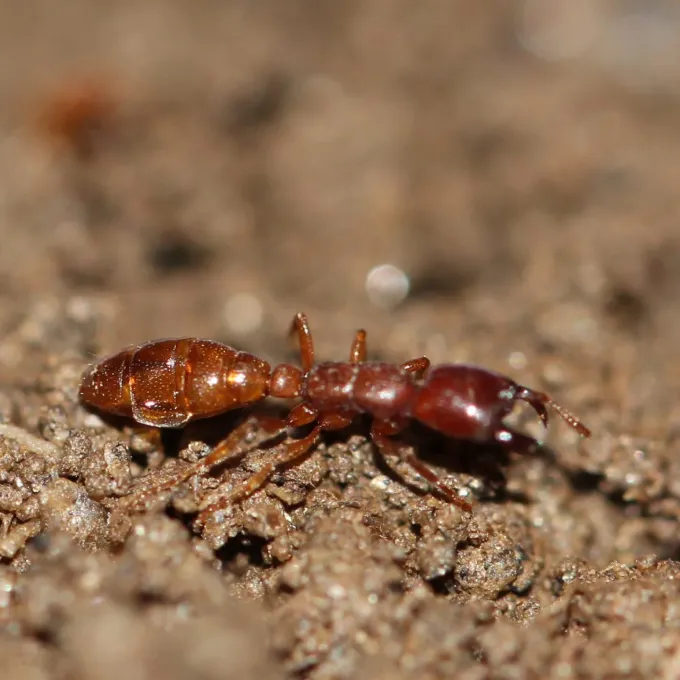
Description
How to identify
Dorylus orientalis is a species of subterranean army ant belonging to the order Hymenoptera and the family Formicidae.
Unlike surface-dwelling ants, these insects spend almost their entire life cycle underground, making detection difficult for farmers.
The workers are small, typically brownish-yellow, and possess strong mandibles adapted for burrowing through soil and vegetable tissues.
They do not build permanent mounds, as the colony is nomadic, constantly moving through the soil layers in search of food sources.
Distinguishing them from other soil-dwelling species requires close inspection of their physical features and specific movement patterns within the soil structure.
What it damages
The primary damage is caused to the root systems and the underground portions of plant stems, affecting various vegetable crops and seedlings.
Crops such as potatoes, tomatoes, onions, and various horticultural plants are highly susceptible to their feeding behavior.
By burrowing into roots and bulbs, they effectively destroy the plant's ability to transport water and essential nutrients from the soil.
Heavy infestations can lead to the rapid wilting and eventual death of large portions of a crop within a very short timeframe.
Furthermore, the physical damage creates openings in plant tissues that facilitate the entry of soil-borne pathogens and fungi.
Signs of infestation
The most common sign of an infestation is the sudden and unexplained wilting of plants, which remains even after adequate irrigation.
Upon extracting the affected plant, you will typically find tunneling evidence, missing root sections, and sometimes the ants themselves near the base.
Localized soil disturbance near the root zone, often appearing as fine, excavated earth, is another indicator of their activity.
Stunted growth patterns in specific patches of the field suggest the ants have established a temporary feeding site beneath those plants.
Direct observation of small, brownish-yellow ants during tillage or weeding operations is a definitive sign that immediate control is needed.
Control measures
Integrated Pest Management (IPM) strategies are essential for managing Dorylus orientalis effectively in agricultural settings.
Deep plowing and soil cultivation are highly effective as they disrupt the ants' migration routes and destroy their temporary nesting chambers.
Application of soil-incorporated insecticides can provide a necessary protective barrier for the root zone during the vulnerable growth stages of the crop.
Maintaining a clean field by removing debris and weeds helps minimize the availability of alternative food sources for the ant colonies.
Crop rotation practices should be utilized to break the cycle of infestation and prevent the long-term establishment of the colony in a single area.
Taxonomy
- Latin name
- Dorylus orientalis
- Order
- Hymenoptera
- Family
- Formicidae
- EPPO code
- DORLOR
Discussion
No discussions yet — be the first.