
Pest · Hemiptera (bugs, aphids, leafhoppers) · affects Alfalfa
Spotted alfalfa aphid
Therioaphis maculata
Description
How to identify
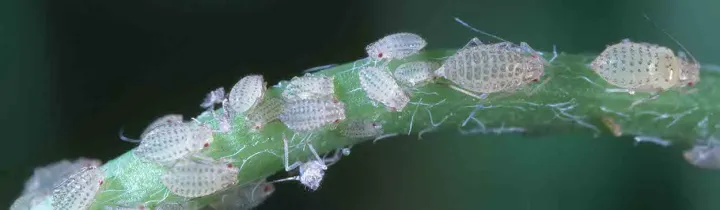
The spotted alfalfa aphid (Therioaphis maculata) is a member of the Aphididae family, order Hemiptera. These small insects, reaching up to 2 mm in length, possess a distinctive appearance ranging from pale yellow to light grey.
The defining diagnostic feature of the adults is the presence of several rows of dark, symmetrical spots on the abdomen. Their antennae are notably longer than their body length, making them distinguishable from other common aphid species found on legumes.
This species is known for its rapid reproductive capacity. It progresses through several nymphal stages that resemble adults but are smaller in size and lack fully developed reproductive organs.
Reproduction is primarily parthenogenetic, allowing colonies to expand exponentially without the need for mating, which is a major factor in their ability to quickly overwhelm host plants.
They typically inhabit the undersides of leaves and prefer the lower to middle canopy of the alfalfa plants, where they can feed undisturbed in a sheltered environment.
What it damages
The spotted alfalfa aphid primarily targets alfalfa, although it can occasionally infest other leguminous crops. Both nymphs and adults contribute to crop loss by piercing plant tissues and extracting nutrient-rich sap.
Mass infestations can be devastating, resulting in the total loss of second or third cuttings. This causes a significant reduction in both the quantity and nutritional quality of the forage produced.
Beyond the direct nutrient drain, these aphids inject a systemic toxin through their saliva. This toxin disrupts plant metabolism, causing severe stunting, leaf curling, and eventual yellowing or necrosis of the foliage.
The excretion of honeydew is another major issue, as it promotes the growth of sooty mold. This fungus blackens the leaves, rendering the harvested material unpalatable and unsuitable for livestock feed.
Infested stands exhibit poor regrowth capabilities after harvesting, leading to long-term yield penalties across the growing season and potential thinning of the stand density.
When it appears
The activity of the spotted alfalfa aphid is strongly correlated with high temperatures and arid conditions. Unlike many other aphids that prefer cool weather, this species thrives during hot, dry summer months.
They overwinter primarily as adults in the crown area of the plants or within soil debris, initiating feeding activities as soon as spring temperatures begin to warm up.
The short generation time allows for numerous reproduction cycles within a single season, with population spikes often occurring during mid-summer droughts.
Migration to new fields typically peaks when host plants are under moisture stress, as drought-stressed alfalfa plants are highly susceptible to rapid colonization and damage.
Autumn activity is largely dependent on climate conditions; however, they can remain active and continue feeding until significant frosts occur, provided the weather remains dry and mild.
Signs of infestation
Early symptoms of an infestation include the appearance of small, chlorotic yellow spots on the leaves, which eventually lead to overall yellowing and the upward curling of leaflets.
Severe infestations cause rapid leaf drop, starting from the base of the plant. This leaves the stems bare and drastically reduces the biomass available for harvesting.
Closer examination of the underside of leaves reveals colonies of small aphids characterized by their signature spotted abdominal patterns, which are easily visible under a field lens.
The presence of a sticky, shiny substance known as honeydew on the leaves is a hallmark sign of aphid activity, often followed by the development of black sooty mold fungus.
The overall crop appearance is marked by stunted growth and lack of vigor, making the affected fields appear significantly thinner and paler compared to healthy stands.
Control measures
Integrated Pest Management (IPM) is essential for controlling this pest. Cultivating resistant alfalfa varieties is the most effective long-term strategy for minimizing damage in susceptible regions.
Timely harvesting of the alfalfa crop can serve as a mechanical control measure, as it removes the aphids' food source and disrupts the life cycle of the developing colonies.
Chemical control involving systemic insecticides may be necessary if economic injury levels are reached, provided that treatments are applied before the harvest safety interval.
- Regular field monitoring using sweep nets to detect early population surges.
- Biological control by preserving natural predators like lady beetles and lacewings.
- Proper irrigation management to reduce plant stress and improve the crop's natural resistance.
Always verify the pre-harvest interval when using chemical pesticides to ensure the safety of the forage for livestock consumption and to avoid illegal chemical residues.
Content graph
Connections · Spotted alfalfa aphid
Most often together:
Marketplace
Products · 4


Biology
Taxonomy
- Latin name
- Therioaphis maculata
- Order
- Hemiptera (bugs, aphids, leafhoppers)
- Family
- Aphididae
- EPPO code
- THERMA
Community
Discussion
No discussions yet — be the first.