

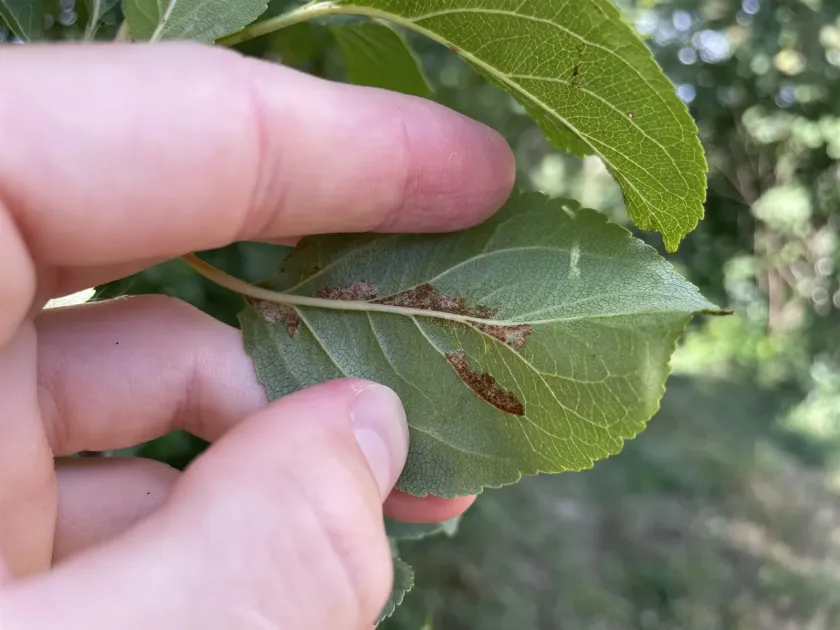
Description
How to identify
The raspberry leaf mite, scientifically known as Eriophyes gracilis, belongs to the family Eriophyidae. These are microscopic organisms, barely visible without magnification, with a worm-like body and two pairs of legs located near the head.
They are specialized parasites that live within the tissues of the host plant, often forming small gall-like structures on the foliage. Their tiny size makes them difficult to monitor until the physical damage to the plant becomes clearly visible.
What it damages
This pest specifically targets species within the Rubus genus, primarily red and black raspberries. Occasionally, they can be found on related wild berries if they are present near the cultivated garden rows.
The mite feeds by piercing plant cells and injecting salivary enzymes. This causes the plant to develop abnormal growths, which disrupts the normal development of leaves and can reduce the photosynthetic capacity of the entire plant.
When it appears
The mites emerge from their overwintering sites, which are typically found under the bud scales, as soon as the plant begins its active growth in early spring. They migrate to the unfolding young leaves to begin their feeding cycle.
The mite goes through several generations throughout the summer months. As environmental conditions turn cooler toward autumn, the mites seek shelter in the buds, where they will spend the winter months protected from extreme cold.
Signs of infestation
Infestation is marked by the appearance of small, distinct pimples or galls on the leaves. These spots are usually yellowish or reddish and can be quite numerous, covering large parts of the leaf surface.
- Development of noticeable bumps or galls on leaf blades.
- Curling and distortion of leaves and young shoot tips.
- Premature yellowing and drying out of the foliage.
- Stunted plant growth and significant reduction in fruit quality.
Control measures
Cultural control includes the removal and destruction of infested canes through pruning. Maintaining vigorous plant health through proper fertilization and watering can help the raspberries tolerate minor infestations better.
Chemical control should rely on the application of specific acaricides, strictly following the labels to ensure crop safety. Applications are most effective during early bud break and post-harvest to avoid chemical residues on the fruit.
Content graph
Connections · Raspberry leaf mite
Most often together:
Marketplace
Products · 14


PRIOBSKAYA
ФГУП Новосибирская зональная станция садоводства Россельхозакадемии
Raspberry
0
0
·
33
1 offer
3.69 €per pack
Buy


Biology
Taxonomy
- Latin name
- Eriophyes malinus
- Order
- Mites
- Family
- Eriophyidae
- EPPO code
- ERPHMN
Community
Discussion
No discussions yet — be the first.