

Tomato rust mite
Calepitrimerus
Description
How to identify
The Tomato rust mite (Calepitrimerus lycopersici) is a member of the Eriophyidae family, order Acariformes. These microscopic pests are wedge-shaped and pale yellow, typically measuring between 0.15 and 0.25 mm in length.
Their life cycle is highly temperature-dependent and extremely rapid, taking about 6 to 7 days to complete under optimal conditions (above 25°C). This rapid reproductive rate allows populations to reach damaging levels very quickly.
Because they are virtually invisible to the naked eye, detection requires the use of a hand lens (at least 20x magnification). They generally congregate on the undersides of leaves, stems, and fruits.
The mites are mostly dispersed by wind, workers' clothing, or tools within the greenhouse environment. They survive the off-season on solanaceous weeds or crop residues if proper sanitation is not maintained.
The pest is primarily a greenhouse threat, but it can also cause significant damage in outdoor field crops during hot and dry summer conditions.
What it damages
This mite is a specialized pest primarily affecting solanaceous crops. Tomatoes are the most common host, but the mite also infests eggplants, peppers, potatoes, and various ornamental plants in the same family.
Signs of infestation
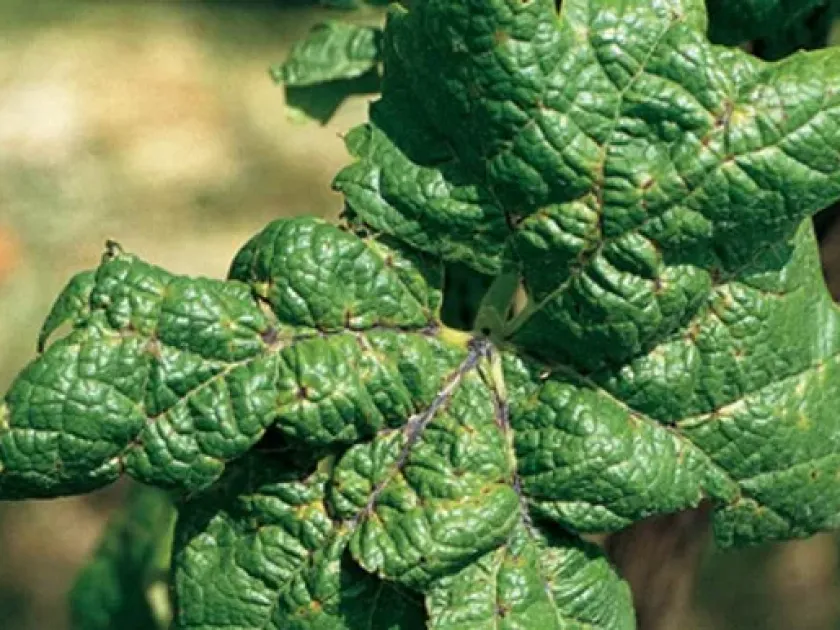
The first symptoms are a bronzing or browning of the leaves and stems, starting from the lower parts of the plant and moving upwards. This gives the plant a distinct "rusty" appearance, hence the name.
Infested leaves become dry, brittle, and eventually curl, turn yellow, and wither. The plant's overall vigor is significantly reduced as the mites feed on the epidermal cells, disrupting normal physiological processes.
Fruit damage is severe, characterized by skin russeting and cracking. The fruit surface turns rough and brown, which destroys its market value and can lead to premature ripening or fruit drop.
Control measures
Integrated Pest Management (IPM) is essential to combat the Tomato rust mite effectively. A combination of monitoring and timely application of specific acaricides is recommended for commercial growers.
- Regular monitoring with magnifying glasses to detect early colonies.
- Application of specialized acaricides, such as those containing abamectin or spiromesifen.
- Biological control using predatory mites like Amblyseius swirskii or Neoseiulus cucumeris.
- Total removal and destruction of crop debris and weeds immediately after harvest.
Content graph
Connections · Tomato rust mite
Most often together:
Marketplace
Products · 1
Biology
Taxonomy
- Latin name
- Calepitrimerus
- Order
- Mites
- Family
- Eriophyidae
- EPPO code
- CALESP
Community
Discussion
No discussions yet — be the first.