
Acalitus
Acalitus
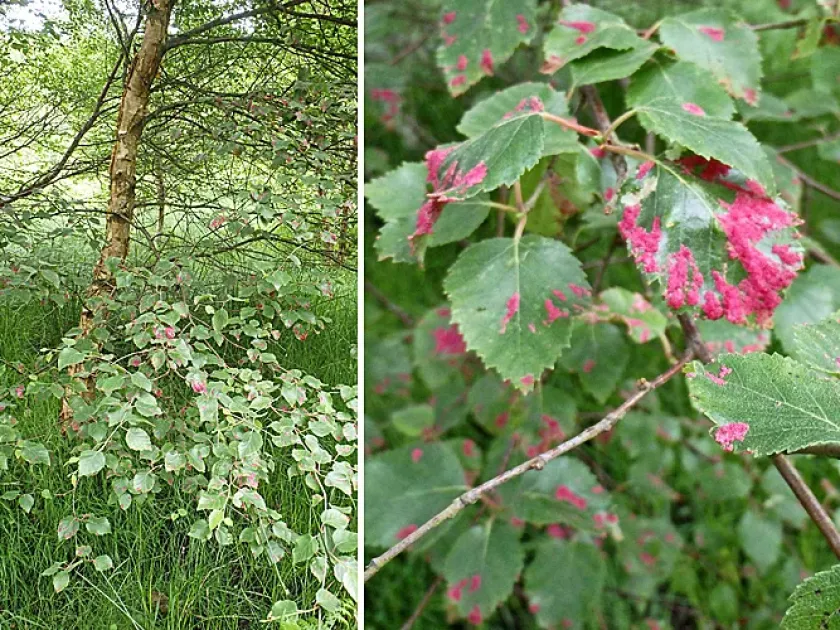
Description
How to identify
The genus Acalitus belongs to the family Eriophyidae, commonly known as gall mites or four-legged mites. These organisms are microscopic and characterized by their elongated, worm-like bodies.
Identification at the species level is complex and usually requires laboratory microscopic examination because the mites are extremely small, typically measuring less than 0.2 mm in length.
The family Eriophyidae is taxonomically diverse, with most Acalitus species exhibiting high host specificity, meaning they rely on specific plant species to complete their lifecycle.
Their bodies are specialized for deep penetration into plant crevices, allowing them to remain shielded from environmental stress and many predators for the majority of their lives.
The biological cycle consists of an egg stage, two nymphal stages, and an adult stage, all of which are spent within the close proximity of the host plant tissues.
What it damages
Acalitus mites are primarily known for causing gall formations, which are abnormal growths or protrusions on leaves, buds, and young shoots of various plants.
By feeding on the plant's sap, these mites disrupt normal physiological development, leading to stunted growth, leaf curling, and overall plant decline.
In berry production, species like Acalitus essigi cause the "red berry" syndrome in blackberries, where fruits fail to ripen properly, remaining hard and bitter.
Severe infestations on fruit trees can cause bud necrosis, leading to sparse foliage, poor flowering, and a significant reduction in fruit yield.
Damage caused by these mites also weakens the host plant, making it more susceptible to secondary fungal or bacterial pathogens entering through feeding wounds.
When it appears
Adult mites overwinter in protected areas, such as under bud scales, within old galls, or inside bark crevices, effectively surviving harsh winter conditions.
As spring temperatures rise, the mites emerge from their winter dormancy to colonize new, emerging leaves and flower buds, initiating the first generation of the season.
Peak infestation activity occurs during the period of rapid vegetative growth, as the soft, succulent tissues provide the most abundant nutrient source for the mites.
Multiple overlapping generations can occur throughout the growing season, especially under favorable warm and humid conditions, leading to rapid population growth.
In late autumn, as the photoperiod shortens and temperatures decline, mites migrate back to their overwintering sites to enter diapause until the following spring.
Signs of infestation
The most distinctive signs of an infestation are galls—small, irregular growths such as bumps, pimples, or hardened outgrowths on the surface of leaves and stems.
Infested foliage often exhibits characteristic curling, twisting, or a distorted, crinkled appearance, sometimes accompanied by chlorotic or reddish discoloration.
In affected fruits, look for uneven ripening, stunted size, and failure to develop normal coloration or softness, rendering the produce unmarketable.
Shoots might show signs of hyper-branching or stunted terminal growth, creating a dense "witches' broom" appearance that is symptomatic of prolonged mite feeding.
- Presence of various types of galls.
- Leaf distortion, curling, and discoloration.
- Stunted fruit development and lack of ripening.
- Abnormal shoot proliferation.
Control measures
Sanitation is a critical management practice; pruning and destroying heavily infested plant parts helps reduce the local population of mites significantly.
Preventive measures include starting with certified, pest-free planting stock to avoid introducing these mites into areas where they are not yet present.
Chemical control involves the application of selective acaricides, which must be applied at precise timings, usually at the onset of spring or peak migration periods.
Systemic treatments may be necessary in severe infestations, although coverage is essential due to the hidden nature of the mites within buds and galls.
Biological control can be enhanced by encouraging native predatory mites (Phytoseiidae) in the garden, which serve as natural regulators of eriophyid mite populations.
Taxonomy
- Latin name
- Acalitus
- Order
- Mites
- Family
- Eriophyidae
- EPPO code
- ACLISP
Discussion
No discussions yet — be the first.