
Tomato early blight
Tomato leaf
Early blight is a major fungal disease caused by Alternaria solani, a pathogenic fungus belonging to the Ascomycota division. It is widely recognized for its ability to persist in soil and crop debris for several seasons.
What the section contains
Tomato early blight
The fungus produces conidia, which serve as the primary inoculum. These spores are spread efficiently by wind, splashing rain, and even by farm workers or equipment moving through the field.
It is a hemibiotrophic pathogen that initially infects the plant tissue and later consumes dead or decaying material, contributing to its survival and reproduction in diverse environments.
Taxonomically, the fungus is characterized by its dark-pigmented conidia, which are multi-celled and possess long, characteristic beaks that aid in identification under a microscope.
Its ecological niche includes various Solanaceous crops, though tomatoes are particularly susceptible, making it a critical concern for both home gardeners and commercial farmers.
The infection manifests on foliage, stems, and fruits. Lower leaves are typically the first to show symptoms, which then progress upwards through the plant canopy.
The disease causes significant defoliation, which limits the photosynthetic capacity of the plant and inevitably leads to smaller, lower-quality yields.
Stem lesions, often called collar rot, can occur at the soil line, girdling the stem and leading to seedling death or plant instability in mature stages.
Infected fruits exhibit sunken, leathery, dark spots, usually near the stem end. These lesions eventually ruin the marketability of the product and provide entry points for secondary pathogens.
Overall, damage includes both direct yield loss and reduced plant vigor, often necessitating extensive management programs throughout the growing season.
Early blight is most prevalent during warm, humid conditions. It often appears after the first fruits begin to set, as the plant directs more energy into development.
Frequent rainfall and prolonged periods of leaf wetness, such as heavy morning dew, provide the ideal moisture levels required for the spores to germinate and infect the plant.
In greenhouses, high humidity and poor ventilation are the primary drivers of the disease, allowing it to spread rapidly even when outdoor temperatures are not optimal.
The incubation period for the fungus ranges from a few days to over a week, depending on the temperature, with optimal development occurring between 20°C and 28°C.
Stress factors such as nutritional deficiencies, excessive fruit load, or water drought can significantly increase the plant's susceptibility to the fungus during the middle of the season.
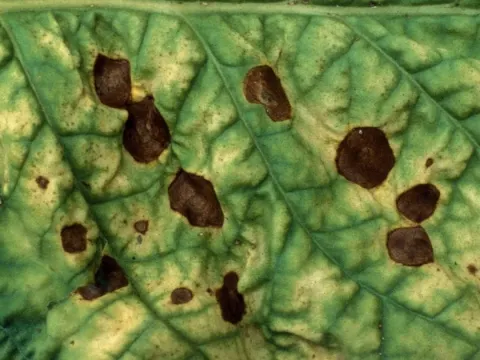
The hallmark sign of early blight is the formation of circular, dark brown to black spots with concentric rings, often described as having a "bullseye" appearance.
As the disease progresses, these spots expand, often causing the surrounding leaf tissue to turn yellow or chlorotic, leading to necrotic patches and premature leaf drop.
A velvety, dark olive-colored mass of conidia may form on the surface of the lesions during periods of high humidity or prolonged damp weather.
On fruits, the lesions are distinct, dark, and sunken, and they can cover a significant portion of the tomato skin as the fruit matures or during storage.
Seedlings may suffer from "damping-off" or stem lesions, which appear as darkened, shriveled sections of the stem that eventually cause the plant to fall over.
Effective management begins with sanitation: removing all plant debris after harvest and practicing long-term crop rotation to break the pathogen's life cycle.
Cultural practices are essential, including the use of drip irrigation to keep foliage dry, mulching to prevent soil splashing, and providing adequate space for air circulation.
- Apply preventive fungicides such as copper-based sprays or chlorothalonil.
- Use systemic fungicides like azoxystrobin or difenoconazole for curative control during early infection stages.
- Maintain balanced soil fertility, ensuring plants are not lacking in nitrogen, which can lead to premature senescence.
- Select tomato varieties known for field resistance or tolerance to Alternaria solani.
- Monitor plants regularly and remove severely infected leaves to reduce the local spore concentration.
Integrated Pest Management (IPM) strategies, which combine cultural, chemical, and biological controls, are recommended to minimize yield loss while reducing chemical dependence.