
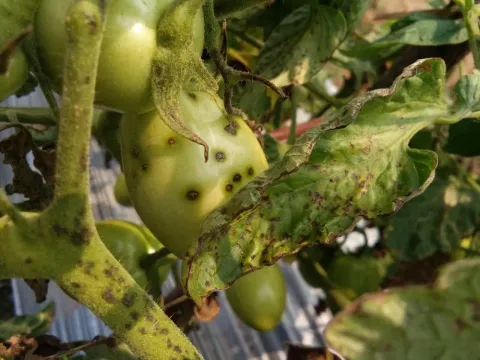
Tomato bacterial spot
Tomato black
The causative agent of this disease is Xanthomonas campestris pv. vesicatoria, a Gram-negative, rod-shaped bacterium. This pathogen is a major threat to solanaceous crops worldwide, classified within the Xanthomonadaceae family.
What the section contains
Tomato bacterial spot
The pathogen overwinters on contaminated seeds, infected plant debris in the soil, and alternative weed hosts. Transmission occurs primarily through splashing water during rain or overhead irrigation, as well as via tools during agricultural handling.
The bacteria gain entry into the plant host through natural openings like stomata or through wounds caused by insect feeding or cultural practices. Once inside, they colonize the intercellular spaces and begin to degrade host tissue.
The disease cycle is heavily influenced by environmental conditions. Rapid development occurs under warm temperatures (20–30°C) and high humidity, which facilitate the colonization and spread of bacterial cells.
In greenhouses, inadequate ventilation and excessive moisture create ideal conditions for severe outbreaks, potentially leading to total loss of marketable yield if not managed properly.
The primary hosts of the pathogen are tomatoes and peppers. The bacteria affect all above-ground parts of the plant, including leaves, stems, and fruits, across various growth stages.
Severe infestations lead to significant defoliation, which weakens the plant and stunts fruit development, ultimately resulting in reduced total biomass and lower crop yield.
Symptoms begin as small, water-soaked, translucent spots on the leaves. As the disease progresses, these spots turn brown or black and often develop a distinct yellow halo.
Stems and petioles exhibit elongated, dark, necrotic streaks. These lesions can cause the tissue to crack, increasing the vulnerability of the plant to secondary infections.
Fruit symptoms are particularly damaging: small, raised, black dots appear, often surrounded by a water-soaked margin. As the fruit matures, these spots become depressed, crater-like lesions that penetrate deep into the flesh.
Infected fruits lose all aesthetic and commercial value. Internal damage to the fruit can also lead to decay and transmission of the bacteria to seeds.
Effective management requires an integrated strategy focused on exclusion and sanitation. Utilizing disease-free certified seeds and resistant cultivars is the primary defense against this pathogen.
Key control measures include:
- Crop rotation with non-solanaceous plants for a period of at least 3 years.
- Sanitation by destroying all plant residues and controlling solanaceous weeds.
- Maintaining optimal ventilation in greenhouses to reduce foliage moisture.
- Application of copper-based bactericides at the first sign of symptoms to slow the spread of the infection.