
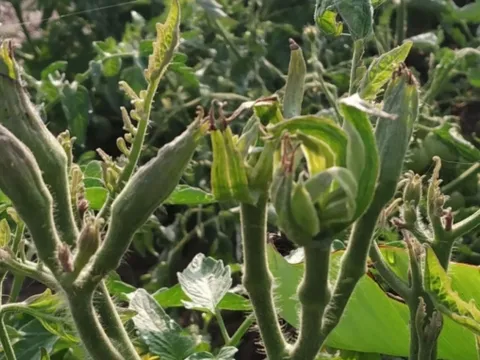
Tomato big bud phytoplasma
Tomato big
Tomato big bud phytoplasma is a specialized intracellular pathogen that lacks a cell wall. It belongs to the class Mollicutes and colonizes the phloem tissue of host plants, where it disrupts essential physiological processes by secreting effector proteins.
What the section contains
Tomato big bud phytoplasma
The phytoplasma is not mechanically transmissible. Its survival in nature depends on a dual-host system: perennial weeds and various plant species serve as reservoirs, while leafhoppers (Cicadellidae) act as the primary vectors that transmit the pathogen.
Once acquired through feeding on an infected plant, the phytoplasma undergoes a latent period within the leafhopper's body. After this incubation, the insect remains infectious for the rest of its life, effectively spreading the disease across commercial fields.
Systemically, the pathogen migrates through the plant via the phloem vessels. By causing cell proliferation and vascular damage, the phytoplasma induces severe hormonal imbalances, most notably involving auxin and cytokinin pathways.
The identification of this pathogen is typically achieved through molecular diagnostic methods, such as PCR, as the phytoplasma cannot be cultured on standard microbiological media due to its highly specialized nutritional requirements.
The disease affects a wide range of Solanaceous crops, including tomatoes, peppers, and eggplants. The economic impact is profound, as the infection renders the plant sterile and prevents the formation of marketable fruit.
Characteristic symptoms include virescence, where floral parts turn green and leaf-like. The calyx becomes enlarged, creating a "big bud" appearance, while stamens and pistils are often malformed, leading to complete fruit failure.
Vegetative growth is also heavily affected. The plant exhibits excessive branching, shortened internodes, and stunted development. These symptoms often lead to a shrubby, broom-like appearance that dramatically reduces total yield.
In addition to sterility, the pathogen causes chlorosis and leaf distortion. Because the phloem is clogged by the phytoplasma, nutrients cannot be transported efficiently to the roots, causing the root system to decline and the plant to wilt prematurely.
Severe infestations often lead to complete crop loss. In regions with high leafhopper pressure, the disease can spread rapidly, causing significant financial hardship for growers who lack strict control measures.
The incidence of Tomato big bud is highly correlated with the seasonal activity of leafhoppers. Populations tend to peak during warm, dry summer months, which provide favorable conditions for the vectors to migrate and feed.
In open-field cultivation, the disease emergence is usually observed after the spring migration of vectors from wintering weed hosts. In greenhouse settings, the environment is controlled, potentially allowing for year-round disease pressure if vectors are present.
Symptoms typically manifest 3 to 6 weeks after initial infection. Consequently, farmers often notice the disease only when plants are in full bloom, making it difficult to contain the spread once visual signs become obvious.
High temperatures accelerate the biological cycle of both the phytoplasma and its insect vectors. Conversely, cooler autumn temperatures reduce insect activity, limiting further spread until the following growing season.
The persistence of the pathogen in perennial weeds ensures that the inoculum remains present throughout the year. Monitoring the migration patterns of leafhoppers during early spring is critical for predictive disease management.
The "big bud" syndrome is the most diagnostic sign, where flower buds swell significantly. These enlarged buds often remain green and fail to open, or they produce sterile, leaf-like floral structures instead of normal petals.
Chlorotic leaves are common, particularly at the terminals of branches. The leaves may become thick, leathery, and smaller than those of healthy plants, often showing an upward curvature of the margins.
Plants often produce numerous lateral shoots, leading to an abnormal, bushy growth habit. This proliferation of small branches is a direct result of the disruption in the plant's natural growth hormone distribution.
If fruit does manage to form, it is typically small, distorted, and lacks commercial value. Often, fruit pedicels are brittle and snap easily, causing premature fruit drop before the harvest stage is reached.
Internally, the stems show browning of the phloem vascular bundles. This necrotic appearance is a clear indicator that the plant's internal transport system has been compromised, preventing the uptake of water and nutrients.
Effective management begins with controlling the leafhopper vectors. The application of systemic insecticides at the first sign of insect migration is essential to prevent the phytoplasma from entering the host plants.
Sanitation is critical; all infected plants must be rogued and destroyed immediately upon detection. Removing host weeds around the perimeter of the field or greenhouse significantly reduces the reservoir of the pathogen.
Exclusion methods are highly effective in protected agriculture. Installing fine-mesh screens on greenhouse vents and doors prevents the entry of leafhoppers, which is the most reliable way to maintain a disease-free environment.
Crop rotation helps break the life cycle of the pathogen by removing hosts for both the vectors and the phytoplasma. Avoiding the proximity of Solanaceous crops to perennial ornamentals is also advised, as many act as asymptomatic carriers.
Developing and planting resistant or tolerant cultivars is a long-term goal for breeders. Currently, strict adherence to integrated pest management (IPM) practices remains the primary defense for vegetable producers worldwide.