
Tomato chlorosis virus
Tomato chlorotic
Tomato chlorosis virus (ToCV) is a plant virus belonging to the genus Crinivirus within the Closteroviridae family. It possesses a bipartite single-stranded positive-sense RNA genome.
What the section contains
Tomato chlorosis virus
This pathogen is strictly transmitted by whiteflies, including Trialeurodes vaporariorum and Bemisia tabaci, in a semi-persistent manner, meaning the insect stays infectious for a limited period.
ToCV is phloem-limited, which is why it causes systemic yellowing and physiological disorders related to the translocation of nutrients throughout the plant.
The virus does not spread mechanically via tools or human contact, nor does it carry through seeds, which helps in designing specific sanitation protocols.
Detection is primarily achieved through molecular techniques such as RT-PCR or serological tests like ELISA due to the difficulty of visual differentiation from nutrient deficiencies.
The primary hosts include economically important solanaceous crops like tomatoes, peppers, and potatoes, as well as various wild weed species that act as reservoirs.
Infection significantly impacts plant vigor, leading to reduced photosynthetic capacity, stunted growth, and poor fruit development, causing severe financial losses.
Large-scale greenhouses are particularly vulnerable, as the stable environment promotes year-round whitefly reproduction and rapid virus dissemination.
In open fields, the damage is exacerbated by seasonal migrations of viruliferous whiteflies from adjacent vegetation into crop plantations.
Total yield decline can be drastic, as infected plants often become non-productive, especially when the initial infection occurs early in the growing season.
The hallmark symptom is interveinal chlorosis on the lower and mid-canopy leaves, often manifesting as a yellowing of the leaf blade while veins remain green.
Leaves may become thick, brittle, and leathery to the touch, and in severe cases, necrotic lesions or leaf curling may occur as the plant's metabolism collapses.
Overall plant development is severely retarded, with shortened internodes and a general reduction in the size of the entire plant structure.
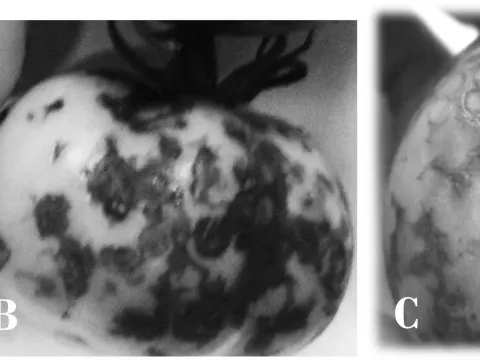
Fruit set is significantly reduced, and those fruits that do develop are often smaller, paler, and have lower sugar content, rendering them unsalable.
Early diagnosis is challenging because the symptoms can easily be mistaken for nitrogen, magnesium, or iron deficiencies, leading to improper management.
Managing the whitefly population is the most critical control strategy, utilizing both integrated pest management (IPM) practices and selective insecticides.
Biological control agents, such as parasitoid wasps (e.g., Encarsia formosa), can effectively reduce the number of whitefly nymphs in greenhouse settings.
Rigorous weed management is essential to eliminate alternative host plants around the perimeter of production areas, reducing the primary source of the virus.
Implementing physical barriers like insect-proof screens on ventilation windows prevents the ingress of migrating whiteflies from neighboring areas.
A "crop-free" period between production cycles is highly effective at breaking the transmission cycle of the virus by depriving whiteflies of their food source.