
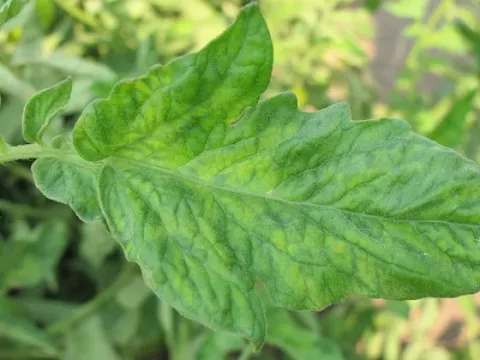
Tomato mosaic virus
Tomato mosaic
Tomato mosaic virus (ToMV) is a member of the genus Tobamovirus. It is one of the most stable plant viruses, capable of persisting in soil, plant debris, and on contaminated surfaces for many years, making management particularly challenging.
What the section contains
Tomato mosaic virus
Transmission occurs primarily through mechanical means. Unlike many other plant viruses, it does not rely on insect vectors; instead, it is spread via human activity, including handling, pruning, and contact with contaminated tools or clothing.
The host range is broad, affecting various Solanaceae family members such as tomatoes, peppers, and eggplants. Many common weeds act as reservoirs, harbouring the virus throughout the year and allowing it to re-infect crops in the new season.
Environmental conditions significantly influence disease development. Optimal replication occurs at temperatures between 25°C and 30°C. In high-density greenhouses, the pathogen can spread rapidly if sanitary protocols are neglected.
The damage caused by ToMV is severe, manifesting as stunted plant growth and significantly reduced yields. Furthermore, the quality of the harvested produce is severely compromised, leading to economic losses in both quantity and market value.
The virus affects the entire systemic structure of the plant. It causes physiological imbalances that result in the malformation of leaves, flowers, and fruits, rendering the produce commercially unattractive.
Affected fruits often display irregular ripening, internal browning, and necrotic spots. These symptoms make the fruits unsuitable for the fresh market and significantly reduce their shelf life during storage and transportation.
The most common symptom is a mosaic pattern on the leaves, characterized by alternating light and dark green patches. Leaf tissue may become distorted, curled, or "fern-like" in appearance due to stunted blade growth.
Infected plants show shortened internodes, leading to a compact and stunted growth habit. If the infection occurs at a seedling stage, the plant may remain severely underdeveloped, producing very few or no fruits.
Control measures rely heavily on rigorous sanitation. Using certified, virus-free seeds and performing pre-sowing seed treatments to inactivate any surface-borne virus is the first line of defense against the pathogen.
All gardening tools, especially pruning shears, must be disinfected frequently using bleach or specialized disinfectants. Strict hygiene practices, such as washing hands and changing clothes, are essential to minimize the risk of mechanical transmission.
Prompt roguing of infected plants is critical. Once symptoms appear, the plant must be removed and destroyed immediately. It is vital not to incorporate plant debris into the soil or compost, as the virus can remain infectious for several years.