
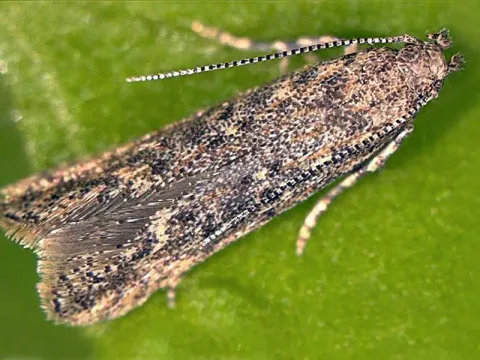
Tomato leafminer
Tojo
The tomato leafminer (Tuta absoluta) is a destructive moth species belonging to the Gelechiidae family. It is considered one of the most significant pests for tomato production globally.
What the section contains
Tomato leafminer
Taxonomic classification: Kingdom Animalia, Phylum Arthropoda, Class Insecta, Order Lepidoptera, Family Gelechiidae, Genus Tuta, species Tuta absoluta.
The life cycle encompasses four stages: egg, larva (caterpillar), pupa, and adult moth. The duration of the cycle depends on the ambient temperature.
Adult moths are nocturnal and are characterized by a greyish-brown appearance with a wingspan of approximately 10 millimeters.
High reproductive potential and a short life cycle allow this pest to quickly establish large populations within a single growing season.
While tomatoes are the primary host, this pest also attacks potatoes, eggplants, peppers, and various wild solanaceous plants.
Larvae consume leaf tissue, creating visible tunnels known as mines, and burrow into stems, flowers, and fruits of the plant.
Fruit damage leads to a loss of marketability and increases susceptibility to secondary bacterial and fungal infections that cause rotting.
Severe infestations can lead to total crop failure, as the larvae destroy the vegetative and reproductive parts of the host plant.
The damage caused to tomato plants significantly reduces the photosynthesis capacity, ultimately stunting growth and reducing overall yield.
The most distinctive signs are the irregular, winding mines on leaves that start as clear patches and eventually turn necrotic brown.
Small holes on the surface of the fruit, often near the calyx, indicate larval penetration and feeding activity within the fruit tissue.
Adult moths can be identified and monitored using pheromone traps, which attract male moths to estimate the infestation level.
Visible frass (excrement) can be seen near the entrance holes of the mines or on the surface of the affected plant parts.
Yellowing and drying of leaves are common symptoms observed as the leaf surface area is extensively mined by the feeding larvae.
Integrated Pest Management (IPM) is essential for controlling Tuta absoluta, as it minimizes environmental impact and prevents resistance development.
Cultural control measures, including crop rotation, sanitation of greenhouse structures, and removal of infested plant material, are critical.
Biological control, utilizing natural enemies like Macrolophus pygmaeus or Trichogramma wasps, is effective in reducing population growth.
Pheromone-based mating disruption and mass trapping are effective non-chemical strategies for managing moth activity during the season.
Chemical control should be applied sparingly, targeting specific life stages and rotating between different modes of action to prevent insecticide resistance.