
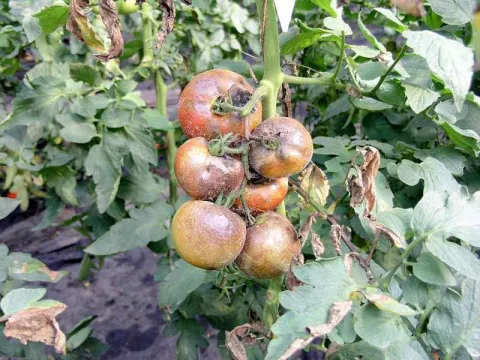
Tomato pith necrosis
Tomato necrotic
The causative agent of tomato pith necrosis is the bacterium Pseudomonas corrugata. It is a phytopathogenic organism belonging to the kingdom Bacteria and the family Pseudomonadaceae.
What the section contains
Tomato pith necrosis
The pathogen is a gram-negative rod-shaped bacterium equipped with flagella, which allows it to persist in soil, debris, and seeds for extended periods.
Infection typically occurs through natural wounds or mechanical injuries sustained during pruning, staking, or other routine cultural practices.
The bacteria thrive when plant tissues are weakened by excessive nitrogen fertilization, which creates soft and susceptible succulent stem growth.
Once inside the vascular system, the pathogen multiplies rapidly, obstructing the transport of water and nutrients, leading to systemic physiological collapse.
Pith necrosis primarily affects greenhouse-grown tomatoes, as the controlled environment often provides the humidity levels required for bacterial proliferation.
While less common in field production, the disease can occur during prolonged periods of cool, wet weather, which promotes pathogen spread and tissue infection.
The disease can cause significant economic losses, potentially impacting 30% to 50% of the crop yield within a single affected greenhouse unit.
Weeds belonging to the Solanaceae family can act as alternate hosts, harbouring the bacteria and serving as a source of inoculum for subsequent tomato crops.
The impact includes not only direct fruit yield reduction but also the high costs associated with plant removal and intensive greenhouse sanitation.
The disease is most prevalent during spring and autumn, particularly when greenhouse environments maintain high humidity and moderate temperatures.
Optimal temperatures for the growth and spread of Pseudomonas corrugata range between 15°C and 25°C (59°F–77°F), making mild weather seasons critical.
The peak of infection often aligns with the period of heavy fruit set, when plants are physiologically stressed and require frequent handling.
Poor ventilation leads to moisture accumulation on stems, creating the perfect conditions for the bacteria to enter plant tissues through micro-wounds.
Overhead irrigation significantly increases the risk of spreading the pathogen, as splashing water carries bacteria from one plant to another.
Initial symptoms manifest as longitudinal brown discolorations on the stem, which eventually develop into distinct necrotic patches.
A cross-section of an infected stem reveals a hollow, discoloured, or rotten pith that often appears soft, dark, and foul-smelling.
Plants often exhibit sudden wilting of the top foliage, even though the plant may initially maintain a green appearance before yellowing and necrosis set in.
A classic diagnostic sign is the prolific development of adventitious roots along the stem, as the plant attempts to compensate for damaged internal vasculature.
- Browning and decay of the internal pith.
- Formation of numerous aerial/adventitious roots.
- Sudden wilting of the upper plant canopy.
- Darkening of stem tissues at nodes.
Rigorous sanitation is the primary control method, involving the immediate removal and destruction of symptomatic plants to prevent further spread.
Disinfecting pruning tools between plants using alcohol or bleach solutions is essential to avoid mechanical transmission of the pathogen.
Adjusting fertilization programs by reducing nitrogen and increasing potassium helps strengthen cell walls and improves overall plant resistance.
Effective ventilation and the use of drip irrigation systems are critical to lowering humidity and preventing bacterial growth on stem surfaces.
Utilizing biological control agents and adhering to strict crop rotation practices can help reduce the soil-borne inoculum levels in greenhouses over time.