
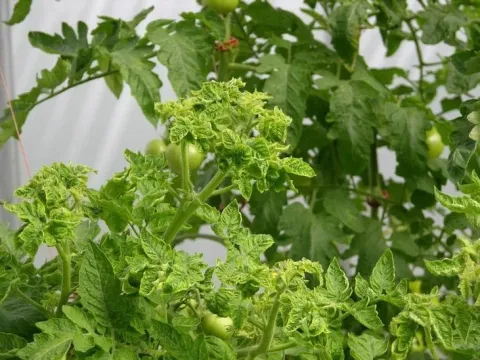
Tobacco yellow leaf curl virus
Tobacco yellow
Tobacco yellow leaf curl virus (TYLCV) is a devastating plant pathogen belonging to the Geminiviridae family and the Begomovirus genus.
What the section contains
Tobacco yellow leaf curl virus
The virus is transmitted by the tobacco whitefly (Bemisia tabaci) in a persistent, circulative manner, meaning the insect remains infective for its entire life after acquiring the virus.
The viral genome consists of circular, single-stranded DNA, which replicates within the nuclei of host plant cells, causing severe physiological disturbances.
Molecular detection techniques like PCR and ELISA are essential for identifying the specific strain of the virus in order to implement effective management programs.
As a highly adaptive pathogen, it can survive in various alternate weed hosts, maintaining its presence in an environment even when the primary crop is not present.
The virus primarily affects tobacco, but it also causes significant economic damage to tomato, pepper, and various legume crops worldwide.
Infection leads to stunted plant growth, reducing leaf biomass and rendering the crop commercially worthless for industrial processing.
Yield loss can reach critical levels if the initial infection occurs during the early seedling stage, often resulting in complete crop failure.
The economic impact is exacerbated by the cost of intensive pesticide programs aimed at controlling the whitefly population, which is the sole transmission vector.
Furthermore, the virus compromises the host's overall resistance, leaving the crop vulnerable to secondary pathogens that thrive in weakened tissues.
Initial symptoms typically manifest as mild chlorosis on the margins of younger leaves, which gradually spreads across the entire foliage.
The characteristic leaf curling and puckering result from abnormal cell division, causing leaves to thicken and become leathery in texture.
Stunting is a hallmark of the disease; infected plants fail to develop normal height, resulting in a bushy, deformed appearance.
Flowers may fail to develop properly or drop prematurely, significantly impacting the reproductive capacity and yield of vegetable crops.
- Upward or downward leaf curling.
- Yellowing of leaf veins (interveinal chlorosis).
- Extreme shortening of internodes.
- Reduced plant vigor and stunted growth.
Effective control requires an integrated pest management (IPM) strategy focused primarily on suppressing whitefly populations using systemic insecticides.
The use of resistant or tolerant crop varieties is the most sustainable approach to minimize the impact of the virus in epidemic-prone regions.
Cultural practices, such as clearing weeds that serve as virus reservoirs and managing crop planting dates, can significantly reduce the initial infection pressure.
Physical barriers like insect-proof nets can be used in high-value greenhouse production to prevent whitefly entry and subsequent viral transmission.
Strict post-harvest sanitation, including the complete destruction of infected plant debris, is vital to prevent the virus from persisting until the next planting season.