
Tobacco streak virus
Tobacco streak
Tobacco streak virus (TSV) is an RNA-based plant pathogen belonging to the Ilarvirus genus within the Bromoviridae family. It is characterized by an exceptionally wide host range, affecting over 200 different plant species across various families.
What the section contains
Tobacco streak virus
The virus lacks a traditional insect vector that transmits it through feeding alone. Instead, its primary mode of transmission in nature involves the movement of infected pollen and seeds, as well as mechanical damage to host tissues.
In field settings, thrips, such as Frankliniella occidentalis, act as crucial vectors. They acquire the virus by feeding on infected pollen and subsequently transmit it to healthy flowers, leading to systemic infection once the pollen germinates.
The virus particles are isometric and relatively unstable outside of plant cells, making environmental persistence limited. However, once inside the plant, it spreads systemically through the vascular system, disrupting normal physiological processes.
Laboratory diagnosis is essential for confirming the presence of TSV, as its symptoms often overlap with other viral pathogens. Techniques such as Enzyme-Linked Immunosorbent Assay (ELISA) or Polymerase Chain Reaction (PCR) are standard practice.
Key crops susceptible to TSV include tobacco, tomatoes, sunflowers, soybeans, peanuts, and various legumes. The infection leads to significant yield losses and reduces the quality of both produce and seeds intended for future planting.
Systemic damage often results in stunting, malformation of plant organs, and poor fruit development. In tobacco crops, necrosis on the leaves directly diminishes the quality of the raw material, rendering it unsuitable for market demands.
Early-stage infections are particularly devastating, often preventing the plant from developing sufficient biomass. In severe cases, the entire plant may become unproductive or die, leading to massive financial losses in commercial agriculture.
As the virus is seed-borne, it poses a severe threat to seed production facilities. Infected seeds serve as primary sources of inoculum, which can lead to rapid disease spread across large acreage if not managed properly.
The presence of TSV in natural vegetation and weeds around crop fields facilitates its persistence. This reservoir allows the virus to survive across different seasons, making it a persistent challenge for continuous cultivation in endemic areas.
TSV is active throughout the growing season. The most significant periods of spread occur during the flowering stage, as the transmission cycle is intrinsically linked to pollination and insect activity within the flower parts.
Warmer temperatures and moderate humidity favor the development of thrip populations. Consequently, years with such weather patterns typically experience higher disease incidence and faster spread across the field.
During the summer, the virus accumulates within the plant tissues. Mechanical activities such as pruning, thinning, or harvesting can inadvertently facilitate the transmission of the virus between infected and healthy plants via contaminated tools.
In late stages of the season, the focus shifts from primary transmission to the establishment of the virus in seeds or perennial rootstocks. This ensures that the pathogen remains ready to propagate in the next season.
Effective management throughout the season requires constant monitoring, especially during the peak flowering times when the risk of pollen-mediated infection is at its highest point for the growing crops.
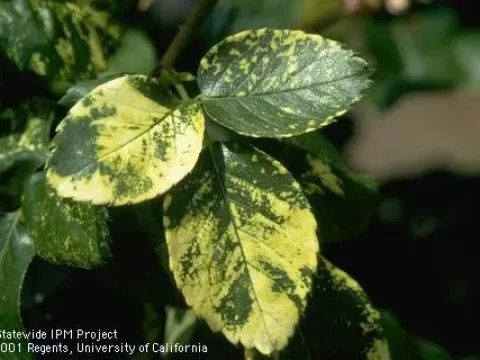
The most distinctive symptom of TSV is the formation of necrotic spots, lines, or rings on the leaves. These often follow the leaf veins, creating a characteristic streaked or jagged appearance that gives the virus its common name.
Fruits may develop irregular discoloration, light-colored spots, or necrotic rings. Flower abortion, reduced fruit set, and overall plant stunting are also common outcomes of a systemic infection by this virus.
Severe infections can lead to the death of terminal buds, causing the plant to stop growing entirely. This leads to bushiness or rosette-like development as the plant attempts to compensate for the loss of apical dominance.
- Necrotic streaks or zig-zag patterns on leaves.
- Ring spots on fruits and stems.
- Deformation and curling of younger leaves.
- Significant stunting and growth reduction.
- Flower sterility or shedding of developing fruit.
While some plants show clear symptoms, others may act as latent hosts, carrying the virus without obvious outward signs. These asymptomatic carriers are particularly dangerous as they go unnoticed while spreading the pathogen.
The foundation of controlling TSV is the utilization of certified, virus-free seeds. Ensuring that starting material is tested for pathogens is the most critical step to prevent the introduction of the virus to new sites.
Weed control in and around the field is vital. By removing reservoirs of the virus, farmers can significantly reduce the potential for insects to carry the pathogen from wild weeds to the cash crops.
Managing thrip populations is a standard preventive measure. Using systemic and contact insecticides during the pre-flowering and flowering stages helps minimize the movement of infected pollen by these insects.
Good agricultural practices, such as sanitizing equipment and tools between rows or plots, are necessary to prevent mechanical transmission. This simple step can drastically reduce the number of new infection sites within a field.
Breeding and planting resistant cultivars remains the long-term solution for management. Genetic resistance is the most sustainable approach, especially in regions where the virus is known to be prevalent and difficult to eradicate.