
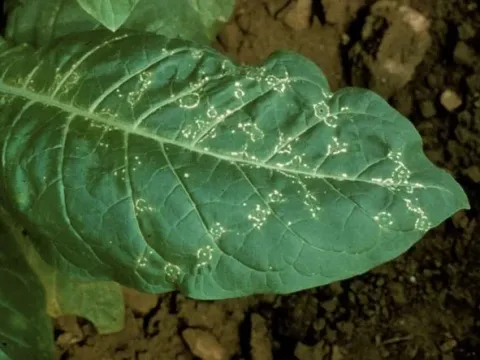
Tobacco ringspot virus
Tobacco ring
Tobacco ringspot virus (TRSV) is a plant pathogenic virus belonging to the family Secoviridae and the genus Nepovirus. It is a single-stranded RNA virus.
What the section contains
Tobacco ringspot virus
The virus functions as an obligate parasite, requiring a living host cell for replication. Its particles are characterized by an icosahedral symmetry.
Transmission occurs naturally via soil-inhabiting nematodes of the genus Xiphinema, which acquire the virus while feeding on infected plant roots.
TRSV is also notable for its ability to be transmitted through seeds of various plant species, which facilitates its spread over large geographic areas.
Mechanical transmission is also common, occurring when contaminated tools or hands transfer infected plant sap to healthy tissues during pruning or cultivation.
The virus has a wide host range, infecting critical agricultural crops such as tobacco, soybeans, cucumbers, tomatoes, grapes, and various ornamental plants.
Infection leads to systemic physiological disruption, significantly reducing crop yield and damaging the marketability of fruits and flowers.
Soybeans are particularly susceptible to the "bud blight" disease caused by TRSV, which leads to flower sterility and severe yield losses.
In vineyards, the virus causes leaf malformation and stunted shoot growth, weakening the vines and reducing the productive lifespan of the plantation.
Ornamental crops are often discarded due to aesthetic damage, as the virus causes disfiguring patterns and necrosis that make the plants unsellable.
Infection and disease development are most rapid during periods of active plant growth and when environmental conditions favor nematode activity.
Symptoms often emerge in the spring as the virus translocates from overwintering root systems to the developing aerial parts of the plant.
In greenhouse settings, transmission can occur throughout the year, provided there is a reservoir of the virus and the presence of vector nematodes.
Moisture levels in the soil are a critical factor; high moisture supports nematode migration, which increases the incidence of viral spread in a field.
Higher summer temperatures can accelerate viral replication within host tissues, leading to more pronounced symptomatic expression on leaves and stems.
The primary diagnostic symptom is the development of chlorotic rings, arcs, or line patterns on foliage, which may eventually progress to tissue necrosis.
Systemic symptoms include stunted growth, leaf deformation, and shortened internodes, often resulting in a bushy appearance of the affected plant.
- Chlorotic spots forming rings.
- Necrosis of leaf veins and margins.
- Flower sterility and premature fruit drop.
- General plant stunting and loss of biomass.
In legumes, "bud blight" is a characteristic sign, where flower buds form but fail to open, eventually turning brown and dying.
Severe infections can lead to the total decline of the plant, affecting both the vegetative structure and the reproductive capability.
The use of virus-free, certified seeds and planting materials is the most fundamental strategy to prevent the introduction of TRSV.
Managing populations of the vector nematode Xiphinema through chemical nematicides or soil solarization can help limit disease spread.
Strict sanitation practices, including the disinfection of pruning tools, are essential to stop the mechanical spread of the virus between healthy and sick plants.
Eliminating weed hosts that act as reservoirs for the virus is a necessary part of a robust integrated pest management plan.
Developing and deploying resistant cultivars remains the most effective long-term solution for managing Tobacco ringspot virus in commercial agriculture.