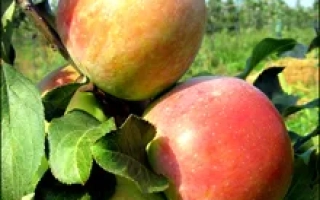
Fuji apple is one of the most popular and recent winter varieties developed by Japanese breeders in the Fujisaki region by crossing Red Delicious and Royal Genet. The tree is medium to tall, reaching 3–3.5 meters in height, with a broadly round or compact crown. Flowering occurs in mid-to-late season, reducing the risk of flower bud freeze. Fruit-bearing begins on the 3rd–5th year depending on the rootstock, with high but periodic yields; therefore, it is recommended to thin out flower buds to improve fruit quality. The variety has moderate resistance to diseases such as scab and powdery mildew, requiring regular preventive treatments. Fuji apples are large, with round-oval or round-elongated shapes, weighing about 200 grams or more. The skin is thin, smooth, matte, reddish-magenta in color with yellow spots and green blurred stripes, sometimes with dark red blush. The flesh is creamy, very juicy, firm, crisp, with a delicate honey-sweet flavor and an excellent aroma. The natural sugar content in the fruit is high, giving it a rich sweetness with a slight tartness. The fruit ripens in mid-to-late October and reaches full maturity approximately one month after harvest. Fuji apples are known for their excellent storability and transportability. Without special cooling, they can be stored for about four to five months, and under proper storage conditions in a refrigerator or controlled atmosphere, they can retain their flavor and nutritional properties for 7–8 months, sometimes even until the next season. Due to these characteristics and exceptional taste, this variety occupies a significant share of global apple sales. Additionally, the fruit retains its quality during thermal processing, expanding its culinary applications.