


SKU #59365
·
45 views
Sloboda
Wheat
User rating
0 votes0% positive reviews
No ratings yet — be the first.
Type of Development
Winter wheat
Wheat Type
Soft wheat variety
Growing Season
260-270 days
Seed: mass 1.000 pcs seeds
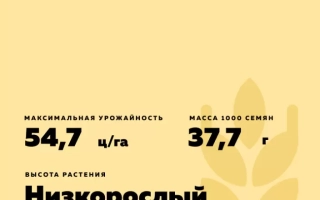
35-40 grams
About product

A stable soft winter wheat variety designed for consistent 4-5 t/ha yields.
Type of Development
Winter wheat
Wheat Type
Soft wheat variety
Growing Season
260-270 days
Seed: mass 1.000 pcs seeds
35-40 grams
Description
Practical Application of Winter Wheat "Sloboda"
For agricultural enterprises focusing on consistent grain production, the soft winter wheat variety "Sloboda" offers a balanced profile for moderate intensive farming. Developed by breeder Igor Olesovich Shestopalov, this variety is designed for growers who prioritize predictability and standardized agricultural practices.
Key Agronomic Factors
- Growth Cycle: With a vegetation period of 260–270 days, the variety allows for structured planning of both sowing and harvesting schedules, ensuring optimal use of farm machinery.
- Grain Quality: A 1,000-kernel weight of 35–40 grams provides a reliable foundation for calculating seeding rates and achieving uniform stand density.
- Winter Hardiness: Rated at 5 points, this variety performs best in regions where extreme winter conditions are managed through appropriate land selection and winter protection strategies.
- Field Management: As the variety possesses moderate lodging resistance, careful management of nitrogen application during the stem elongation stage is recommended to maintain optimal crop structure and harvestability.
The potential yield of 4–5 tons per hectare is achievable through adherence to standard agronomic protocols. "Sloboda" is particularly suited for farming systems that aim for high output without the need for excessive chemical inputs, making it an efficient choice for cost-conscious producers. The variety serves as a stable component of a balanced rotation, provided that soil moisture and fertility requirements are met.
Crop & resistance
Crop
Specifications hover over for a hint about the specification
| Type of Development | |
|---|---|
|
Wheat Type
Wheat Type
Biologically hard wheat differs from soft wheat in its greater demand for soil fertility and agronomic conditions (especially regarding field cleanliness from weeds), lower drought resistance and plasticity, relatively weaker root development, especially nodal roots, and lower ti... |
|
| Growing Season | 260-270 days |
| Seed: mass 1.000 pcs seeds | 35-40 grams |
| Winter Hardiness, Ratings (9-1) | 5 |
| Resistance to lodging | |
| Potential Yield | 4-5 tons |
| Registration year | 2014 |
| Catalog | Catalog → Wheat |
| Legal data |
Show · 5
|
| Country | Russia |
Store offers
Prices are updated on loadLoading offers…
Aggregator catalog: prices are collected automatically from store websites, normalized by AI and converted at the current exchange rate. Before ordering, confirm the price and availability on the store's website. This block is not indexed by search engines — the data is loaded after the page opens.
Not yet комментариев. Be the first!
Alternatives
Wheat seeds · similar varieties




See also
Often considered together with this variety






Recently viewed
Products you’ve viewed on this site
Reviews · 0