


SKU #59371
·
49 views
SOLNECHNAYA
Wheat
User rating
0 votes0% positive reviews
No ratings yet — be the first.
Type of Development
Spring wheat
Growing Season
80-90 days
Seed: mass 1.000 pcs seeds
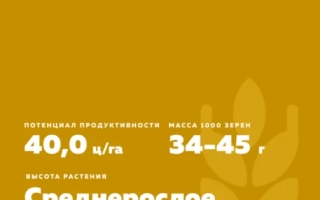
35-40 grams
Grain: gluten content
More than 30%
About product

High-protein spring wheat variety with a short growing season and a yield potential of up to 9 tons.
Type of Development
Spring wheat
Growing Season
80-90 days
Seed: mass 1.000 pcs seeds
35-40 grams
Grain: gluten content
More than 30%
Description
Technical Profile of the Spring Wheat Variety «Solnechnaya»
The «Solnechnaya» variety is a product of scientific research conducted by the Emanuel Institute of Biochemical Physics and the Tsitsin Main Botanical Garden of the Russian Academy of Sciences. It is engineered for intensive farming systems, specifically optimized for a short vegetative period of 80–90 days, which is vital for regions with unpredictable seasonal weather patterns.
Biological Traits and Grain Quality
A key agronomic advantage of this variety is its high protein and gluten content, consistently exceeding 30%, which places it in the high-quality wheat category. From an engineering and cultivation standpoint, the variety offers several distinct advantages:
- Thousand-kernel weight: 35–40 grams, providing optimal seedling vigor and stand establishment.
- Disease resistance: Built-in resistance to brown rust significantly reduces the necessity for intensive fungicide programs, lowering production costs.
- Lodging resistance: The robust stem structure ensures strong standing ability, which is critical for achieving the potential yield capacity of 8–9 metric tons under intensive management.
Field Application
«Solnechnaya» is specifically suitable for operations prioritizing grain quality and operational efficiency within tight planting windows. Its short maturation cycle allows the crop to avoid the heat-stress risks of mid-to-late summer, preserving yield potential. To achieve the 8–9 ton yield threshold, the variety requires appropriate nutrient management and standard intensity agricultural practices.
Video · 2 videos
Suggest a video →Crop & resistance
Crop
Disease resistance
Specifications hover over for a hint about the specification
| Type of Development | |
|---|---|
| Growing Season | 80-90 days |
| Seed: mass 1.000 pcs seeds | 35-40 grams |
|
Grain: gluten content
Grain: gluten content
Raw gluten of grain is a hydrated protein and consists of water-insoluble protein fractions, as well as a small amount of starch, fats, and other substances firmly bound by proteins. Since gluten is primarily composed of proteins, its yield and quality depend on the quantity and... |
More than 30% |
| Resistance to lodging | |
| Potential Yield | 8-9 tons |
| Registration year | 2016 |
| Catalog | Catalog → Wheat |
| Legal data |
Show · 17
|
| Country | Russia |
Store offers
Prices are updated on loadLoading offers…
Aggregator catalog: prices are collected automatically from store websites, normalized by AI and converted at the current exchange rate. Before ordering, confirm the price and availability on the store's website. This block is not indexed by search engines — the data is loaded after the page opens.
Not yet комментариев. Be the first!
Alternatives
Wheat seeds · similar varieties


See also
Often considered together with this variety



Recently viewed
Products you’ve viewed on this site
Reviews · 0