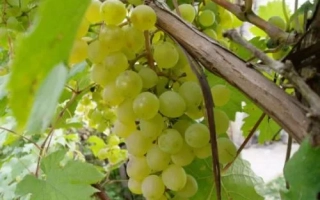
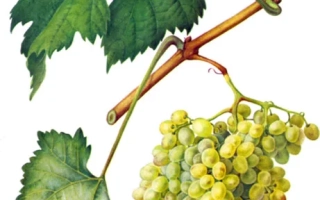
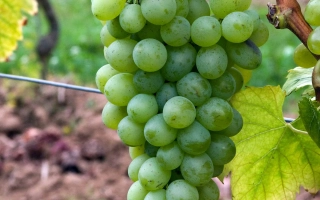
Müller Thurgau — a technical white grape variety developed by the German breeder Hermann Müller in 1882 in the Thurgau region, Switzerland. This variety is a clone of Riesling and Madlen Royal and has gained widespread popularity, especially in Germany, where it occupies about 12% of vineyards. The berries are round, yellowish-white with a golden hue, giving the wine its characteristic light color. The yield of Müller Thurgau is high, approximately 30% higher than that of Riesling, and ripening occurs early, at the beginning of harvest.
The variety is adaptable to various climatic conditions, requiring less sun and being more resilient to different weather conditions, but it requires more rainfall and well-drained soils. Despite its high yield, the variety is susceptible to gray rot, requiring careful attention and irrigation. In Zakarpattia and other regions, Müller Thurgau is widely used for producing table wine, juice, and blending, which helps maintain its popularity in winemaking.
Historically, Müller Thurgau was the basis for dry white wines in Germany until the 1980s, but its popularity declined with changing commercial preferences, giving way to higher-quality varieties such as Riesling and Silvaner. Nevertheless, due to its high yield, early ripening, and versatility in wine and juice production, Müller Thurgau remains a sought-after variety in wine regions with suitable climatic conditions.