


SKU #46141
·
64 views
Cinsaut
Grape
User rating
0 votes0% positive reviews
No ratings yet — be the first.
Usage Group
Universal, Technical
Ripening Period
Mid-late
Cold Resistance
Average (up to -21°C)
Resistance to Mildew
Low
Store offers · 1 from 1 stores
Prices are updated on loadLoading offers…
Available at: Gorix
Aggregator catalog: prices are collected automatically from store websites, normalized by AI and converted at the current exchange rate. Before ordering, confirm the price and availability on the store's website. This block is not indexed by search engines — the data is loaded after the page opens.
About product

Cinsaut — a versatile red technical grape variety originating from southern France and widely cultivated in Western Europe, North Africa, South America, and some regions of former USSR. The vines of this variety have moderate growth vigor, and one-year-old canes mature well. Leaves are medium-sized, round, flat or slightly funnel-shaped, five-lobed with characteristic lily-shaped indentations and…
Usage Group
Universal, Technical
Ripening Period
Mid-late
Cold Resistance
Average (up to -21°C)
Resistance to Mildew
Low
Description
Cinsaut — a versatile red technical grape variety originating from southern France and widely cultivated in Western Europe, North Africa, South America, and some regions of former USSR. The vines of this variety have moderate growth vigor, and one-year-old canes mature well. Leaves are medium-sized, round, flat or slightly funnel-shaped, five-lobed with characteristic lily-shaped indentations and triangular teeth. Young shoots have a light green crown with a bronze tinge and dense woolly pubescence with a wine-red hue. Flowers are hermaphroditic, which promotes good pollination and fruit set.
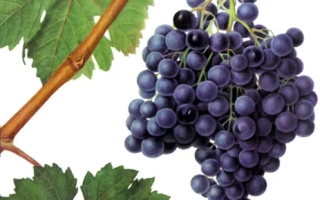
Bunches of Cinsaut are medium to large in size, conical or cylinder-conical in shape, medium to dense, weighing from 154 to 300 grams. Berries are large, oval, dark blue with a dense waxy bloom, weighing about 3 grams each. Skin is of medium thickness, elastic and edible, flesh is juicy-fleshy, slightly crisp with a refreshing flavor and colorless juice. Berries contain 2–4 small seeds. Sugar accumulation reaches approximately 17 Brix, and juice acidity is about 7.5 g/L, providing a harmonious and balanced flavor without additional aromas.
Cinsaut is a medium-late maturing variety with a vegetative period of about 148–160 days, ripening at the end of September. The variety tolerates drought well and withstands short-term temperature drops down to -19–22 °C, but requires careful protection against mildew, oidium, and gray rot, to which it is susceptible. Cinsaut grape is used both for fresh consumption and for wine production, particularly for dry rosé wines, where it performs best. Despite its versatility, the variety is not intended for long-term wine aging.
Bunches of Cinsaut are medium to large in size, conical or cylinder-conical in shape, medium to dense, weighing from 154 to 300 grams. Berries are large, oval, dark blue with a dense waxy bloom, weighing about 3 grams each. Skin is of medium thickness, elastic and edible, flesh is juicy-fleshy, slightly crisp with a refreshing flavor and colorless juice. Berries contain 2–4 small seeds. Sugar accumulation reaches approximately 17 Brix, and juice acidity is about 7.5 g/L, providing a harmonious and balanced flavor without additional aromas.
Cinsaut is a medium-late maturing variety with a vegetative period of about 148–160 days, ripening at the end of September. The variety tolerates drought well and withstands short-term temperature drops down to -19–22 °C, but requires careful protection against mildew, oidium, and gray rot, to which it is susceptible. Cinsaut grape is used both for fresh consumption and for wine production, particularly for dry rosé wines, where it performs best. Despite its versatility, the variety is not intended for long-term wine aging.
Crop & resistance
Crop
Disease resistance
Specifications hover over for a hint about the specification
| Usage Group | |
|---|---|
|
Ripening Period
Ripening Period
It takes 70-100 days until pepper reaches flowering stage, 130-160 days until technical fruit ripeness, and 135-180 days until physiological ripeness. |
Mid-late |
| Cold Resistance | |
| Resistance to Mildew | |
| Resistance to oidium | |
| Resistance to Gray Mold | |
| Bush Growth Power | |
| Flower Type | |
| Bunch Size | Medium (300–500 g) |
| Berry Size | Large (5–8 g) |
| Berry Color | |
| Flavor | |
| Sugar Content | Average (16–20%) |
| Zoning | |
| Care Requirement | |
| Assignment | |
| Registration year | 1936 |
| Catalog | Catalog → Grape |
| Country | Ukraine |
Not yet комментариев. Be the first!
Alternatives
Grapevine saplings · similar varieties





See also
Often considered together with this variety




Recently viewed
Products you’ve viewed on this site
Reviews · 0