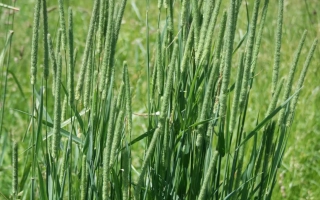
Timothy grass (Phleum pratense) is a perennial herbaceous plant in the Grass family, widely found in meadows, steppes, and anthropogenic areas such as lawns and parks. The plant is characterized by erect stems with alternate leaf arrangement: lanceolate leaves with a pointed tip and a rough surface. The inflorescence is an ear, with green flowers spotted with yellow, and the fruit is a dry grain.
The culture is distinguished by good adaptation to heavily watered soils and high winter hardiness, although resistance to elevated temperatures is limited. Successful cultivation requires intensive soil processing due to small seeds and low growth rate in the first year of cultivation. On average, the time of ear emergence is average, and dry matter yield is at the level of standards.
Timothy grass is valued as a forage plant due to good palatability by livestock both as hay and on pastures. Hay from this culture is a rich source of vitamin D, which regulates mineral exchange, as well as non-nitrogenous extractive substances (NEES), which maintain bacterial protein synthesis in the rumen. The mineral nutrition of hay is high: a significant level of calcium and other trace elements make it a valuable component of livestock rations.