

SKU #72163
·
67 views
GRIVSKAYA
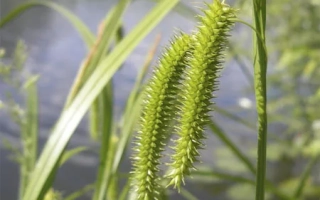
Timothy Grass
User rating
0 votes0% positive reviews
No ratings yet — be the first.
Usage Type
On feed
Registration year
2025
Prices in stores
from3.88 €per 1 kg
pack from 97.12 € per 25 kg
1 offer from 1 store
Store offers · 1 from 1 stores
Prices are updated on loadLoading offers…
Available at: Bubochka
Aggregator catalog: prices are collected automatically from store websites, normalized by AI and converted at the current exchange rate. Before ordering, confirm the price and availability on the store's website. This block is not indexed by search engines — the data is loaded after the page opens.
About product

Reliable forage yields and high-quality hay with low maintenance costs.
Usage Type
On feed
Registration year
2025
Description
Field Performance of Timothy Grass «Grivskaya»
Selecting a timothy grass variety like «Grivskaya», developed by the Williams FRC, is a strategic move for managers focused on stable forage yields. This variety is known for its reliability and low-maintenance requirements, making it a pragmatic choice for large-scale operations.
Operational Reliability
For operators, the primary advantage of «Grivskaya» is its winter hardiness. This trait mitigates the risk of stand thinning in regions with unpredictable winter cycles. The regrowth rate following the harvest is consistent, allowing for accurate planning of the cutting schedule. Because the variety does not reach maturity too rapidly, there is a comfortable window for harvesting, which is crucial when weather conditions fluctuate.
Maintenance and Yield Efficiency
- Ease of Harvest: High leafiness ensures that the resulting hay is palatable and soft, increasing overall feed efficiency for livestock.
- Disease Management: The variety shows strong natural resistance to common pathogens, which directly lowers the budget for chemical plant protection.
- Field Efficiency: The high germination energy results in uniform stands. This uniformity is highly beneficial for machine operators, as it allows for clean, seamless passes with mowers, reducing biomass losses.
«Grivskaya» is built for those who require predictable results without complex agronomic protocols. It fits well into existing crop rotation systems where low overheads and consistent yields are the priority. It is a robust, no-nonsense forage crop that delivers high-quality biomass with minimal intervention.
Specifications
| Usage Type | |
|---|---|
| Registration year | 2025 |
| Catalog | Catalog → Timothy Grass |
| Legal data |
Show · 1
|
| Country | Russia |
Not yet комментариев. Be the first!
Alternatives
Timothy Grass · similar varieties


See also
Often considered together with this variety



Recently viewed
Products you’ve viewed on this site
Reviews · 0