


SKU #72151
·
54 views
KAMALINSKAYA 96
Timothy Grass
User rating
0 votes0% positive reviews
No ratings yet — be the first.
Usage Type
On feed
Registration year
1957
About product

Kamalinskaya 96 is a variety of meadow timothy (Phleum pratense L.) recognized in scientific circles and widely used in agriculture. It is distinguished by high hay yields, reaching 4–8 tons of dry matter per hectare depending on soil type: dry meadows – 4‑4.5 t/ha, lowlands – 5‑6 t/ha, drained marshes – 6‑8 t/ha. One kilogram of hay from this variety contains about 0.49 feed units and 42 grams of…
Usage Type
On feed
Registration year
1957
Description
Kamalinskaya 96 is a variety of meadow timothy (Phleum pratense L.) recognized in scientific circles and widely used in agriculture. It is distinguished by high hay yields, reaching 4–8 tons of dry matter per hectare depending on soil type: dry meadows – 4‑4.5 t/ha, lowlands – 5‑6 t/ha, drained marshes – 6‑8 t/ha. One kilogram of hay from this variety contains about 0.49 feed units and 42 grams of digestible protein, making it a valuable protein source for cattle farming.
The variety is characterized by good adaptability to climatic conditions: it is frost-hardy, withstands early and late frosts, as well as temporary excess soil moisture. However, young plants are sensitive to moisture deficiency, so additional irrigation is required during drought periods. Timothy 96 grows on a wide range of soils – from heavy clay and loam to light sandy loam and wet meadows, but is not suitable for sandy and alkaline soils.
In agronomic practice, the variety is often used in mixed sowing with clover. Joint cultivation increases resistance to unfavorable conditions and increases clover yield compared to pure sowing. Timothy 96 is also suitable for the production of silage, silage, green and pasture feed, due to its high nutritional value and good preservability during processing.
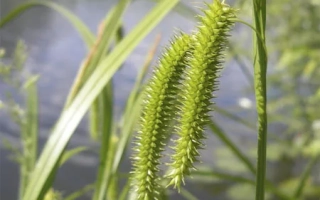
Externally, the plant has an upright growth, medium-stem roughness, linear and light green leaves. The inflorescence is dense, cylindrical, awnless, and seeds are small, round-oval shaped. The variety is moderately resistant to rust and helminthosporiosis, which facilitates its cultivation without frequent use of chemical agents.
The variety is characterized by good adaptability to climatic conditions: it is frost-hardy, withstands early and late frosts, as well as temporary excess soil moisture. However, young plants are sensitive to moisture deficiency, so additional irrigation is required during drought periods. Timothy 96 grows on a wide range of soils – from heavy clay and loam to light sandy loam and wet meadows, but is not suitable for sandy and alkaline soils.
In agronomic practice, the variety is often used in mixed sowing with clover. Joint cultivation increases resistance to unfavorable conditions and increases clover yield compared to pure sowing. Timothy 96 is also suitable for the production of silage, silage, green and pasture feed, due to its high nutritional value and good preservability during processing.
Externally, the plant has an upright growth, medium-stem roughness, linear and light green leaves. The inflorescence is dense, cylindrical, awnless, and seeds are small, round-oval shaped. The variety is moderately resistant to rust and helminthosporiosis, which facilitates its cultivation without frequent use of chemical agents.
Crop & resistance
Disease resistance
Specifications
| Usage Type | |
|---|---|
| Registration year | 1957 |
| Catalog | Catalog → Timothy Grass |
| Legal data |
Show · 4
|
| Country | Russia |
Store offers
Prices are updated on loadLoading offers…
Aggregator catalog: prices are collected automatically from store websites, normalized by AI and converted at the current exchange rate. Before ordering, confirm the price and availability on the store's website. This block is not indexed by search engines — the data is loaded after the page opens.
Not yet комментариев. Be the first!
Alternatives
Timothy Grass · similar varieties




See also
Often considered together with this variety


Recently viewed
Products you’ve viewed on this site
Reviews · 0