
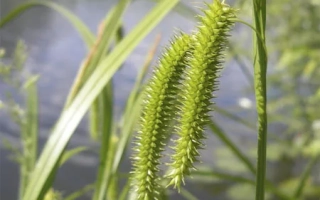

SKU #72155
·
61 views
MAYSKAYA 1
Timothy Grass
User rating
0 votes0% positive reviews
No ratings yet — be the first.
Usage Type
On feed
Registration year
1956
Prices in stores
from4.48 €per 1 kg
pack from 2.24 € per 0.5 kg
3 offers from 3 stores
Store offers · 3 from 3 stores
Prices are updated on loadLoading offers…
Available at: Agro-market · Цибулинка · Semena
Aggregator catalog: prices are collected automatically from store websites, normalized by AI and converted at the current exchange rate. Before ordering, confirm the price and availability on the store's website. This block is not indexed by search engines — the data is loaded after the page opens.
About product

A reliable forage Timothy grass variety with high disease resistance and consistent yields.
Usage Type
On feed
Registration year
1956
Description
Reliable Forage Resource: Managing the 'Mayskaya 1' Variety
When selecting Timothy grass for meadows and pastures, the focus is always on stand longevity and predictable yields. The 'Mayskaya 1' variety, developed by the Kaliningrad Research Institute of Agriculture, has established itself as a reliable workhorse for livestock farms focused on producing high-quality forage.
Agrotechnical Performance and Maintenance
In the field, this variety shows excellent resistance to leaf spot. For an agronomist, this translates to lower fungicide costs and stable foliage quality, which retains nutritional value right up until the harvest. The crop is well-adapted to temperate climate zones, ensuring consistency in your crop rotation.
- Use Type: Purely for forage. The variety forms a dense, thick stand that is resistant to trampling, which is critical for intensive livestock grazing.
- Stand Maintenance: Due to its rapid regrowth rate after mowing, 'Mayskaya 1' allows for multiple cuts per season, significantly boosting land productivity without the need for constant reseeding.
- Resilience: The variety features high winter hardiness. It survives harsh winters well, minimizing the need for replanting and keeping the farm’s forage supply secure.
By choosing this variety, you gain predictable results: with proper fertilization, 'Mayskaya 1' provides a consistent biomass volume with excellent digestibility metrics for livestock. This is the choice for producers who prioritize economic efficiency in forage production and want to minimize risks associated with crop diseases.
Crop & resistance
Disease resistance
Specifications
| Usage Type | |
|---|---|
| Registration year | 1956 |
| Catalog | Catalog → Timothy Grass |
| Legal data |
Show · 3
|
| Country | Poland |
Not yet комментариев. Be the first!
Alternatives
Timothy Grass · similar varieties





See also
Often considered together with this variety



Recently viewed
Products you’ve viewed on this site
Reviews · 0