


Prices in stores
No offers yet — stores have not added prices for this product yet.
Similar varieties with prices
-
GOLDEN MACKEYFERMERSKOE HOZYaJSTVO 'KAPRIS'
from 0.37 €
-
 TAGETES 'ORANGEPRINZ'Nauchno-proizvodstvennaya firma Rossiyskiye Semena
from 0.12 €
-
 STAR ORACLE
from 26.11 €per 1000 seeds
-
 ORANGE WAVESFERMERSKOE HOZYaJSTVO 'KAPRIS'
from 11.97 €per 1000 seeds
Plant Height
30–50
Flower Color
Orange
Purpose
Balcony boxes
Disease Resistance
High
Your mark
0 votes
0% positive ratings
Description
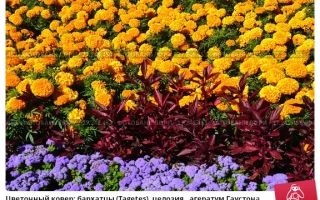
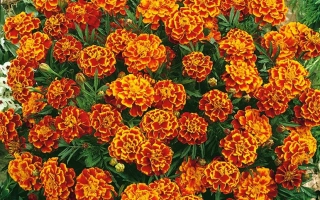
Marigold 'Amber' is an annual plant of the Asteraceae family with erect stems reaching about 35 cm in height. The leaves are pinnately cut, light green, and arranged oppositely or alternately. The flower heads resemble baskets with a diameter of up to 10–15 cm and are colored dark orange, giving them a bright decorative appearance.
The flowering period begins in June and continues until the first frosts. The seeds retain viability for 3–4 years, so self-seeding can be expected. For open ground cultivation, sow the seeds in late May–early June; the first seedlings appear within 5–10 days. For seedling cultivation, it is recommended to sow in late March–early April.
Marigold 'Amber' possesses beneficial properties for vegetable crops: when planted near vegetables, they reduce the risk of fungal diseases, particularly Fusarium, and protect against certain nematode species. Consequently, this plant is often used as a protective companion in gardens and vegetable plots.
For decorative cultivation, marigolds are excellent for pots, planters, balcony boxes, and open flower beds. They can be combined with Primula and Cineraria to create bright compositions. When planting, it is advisable to cover the soil with non-woven material (acril, lutrasil), which allows sowing seeds a week or a half earlier than usual and accelerates the onset of flowering.
Crop & resistance
Crop
Disease resistance
Pest resistance
Specifications
| Plant Height | 30–50 |
|---|---|
| Flower Color | |
| Purpose | |
| Disease Resistance | |
| Registration year | 2010 |
| Catalog | Catalog → Tagetes |
| Manufacturer | Agrofirma Aelita |
| Country | Russia |
No reviews yet. Be the first to share your experience.




See also
Often considered together with this variety






Recently viewed
Products you’ve viewed on this site
Reviews