


SKU #73221
·
65 views
Sweetclover CHERMASAN
Sweet Clover
User rating
0 votes0% positive reviews
No ratings yet — be the first.
Type
White yarrow
Plant Height
150–200
Usage
Hay Bales, Green Mass, Apiculture
Registration year
1993
About product

A resilient, high-yielding nectar source and forage crop, perfectly adapted to harsh soils and dry climates.
Type
White yarrow
Plant Height
150–200
Usage
Hay Bales, Green Mass, Apiculture
Registration year
1993
Description
A Reliable Honey Plant and Forage Source
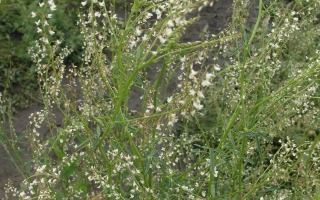
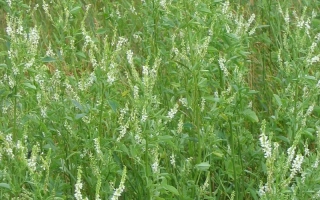
The white sweet clover "Chermasan," developed by the Ufa Federal Research Center of the Russian Academy of Sciences, is a high-performance variety designed for farms that prioritize both forage production and beekeeping. Reaching heights of 150–200 cm, it generates a substantial volume of green mass, making it an excellent solution for producing hay on challenging, arid, or saline soils where other legumes often struggle to thrive.
Why it stands out from the competition
The primary strength of "Chermasan" lies in its resilience and adaptability to harsh climates. Unlike many imported varieties, it withstands extreme temperatures, providing stability for farmers in fluctuating environments:
- Yield Consistency: The crop shows remarkable recovery capacity even after prolonged dry spells, ensuring stable forage production.
- Superior Nectar Production: Due to its extended flowering period, "Chermasan" is a top-tier choice for apiaries, providing bees with a consistent source of nectar during mid-summer.
- Soil Health Benefits: Its aggressive root system effectively aerates the subsoil and enriches the earth with nitrogen, serving as an excellent precursor for cereal crop rotations.
Target Application
"Chermasan" is an optimal choice for farm owners who integrate apiculture with livestock production. It is particularly effective for managing erosion-prone fields, providing both soil stabilization and high-quality harvestable mass. While the variety is highly productive, growers should manage the harvesting process carefully: due to the natural coumarin content in young plants, hay must be dried thoroughly to ensure optimal moisture levels and safety for livestock consumption.
Crop & resistance
Crop
Specifications hover over for a hint about the specification
|
Type
Type
Galia (Galia) type — relatively new, of Israeli origin, although there are indications that this variety may originate from Spain. The fruits of this type are round or oval, weighing about 1 kg. The surface is smooth, covered with a delicate, connected netting, turning yellow whe... |
|
|---|---|
| Plant Height | 150–200 |
| Usage | |
| Registration year | 1993 |
| Catalog | Catalog → Sweet Clover |
| Legal data |
Show · 2
|
| Country | Russia |
Store offers
Prices are updated on loadLoading offers…
Aggregator catalog: prices are collected automatically from store websites, normalized by AI and converted at the current exchange rate. Before ordering, confirm the price and availability on the store's website. This block is not indexed by search engines — the data is loaded after the page opens.
Not yet комментариев. Be the first!
Alternatives
Sweet Clover · similar varieties




See also
Often considered together with this variety






Recently viewed
Products you’ve viewed on this site
Reviews · 0