


SKU #73226
·
60 views
Volzhanin
Sweet Clover
User rating
0 votes0% positive reviews
No ratings yet — be the first.
Type
White yarrow
Usage
Hay Bales, Green Mass
Registration year
2004
About product

The white clover «Volzhainin» (Melilotus albus Medik.) variety was developed by the Volga Regional Research Institute of Breeding and Seed Production named after P.N. Konstantinov in the Samara region through free cross-pollination of VIR collection samples. It was included in the state register of breeding achievements in 2000, confirming its stable characteristics and wide recognition among agro…
Type
White yarrow
Usage
Hay Bales, Green Mass
Registration year
2004
Description
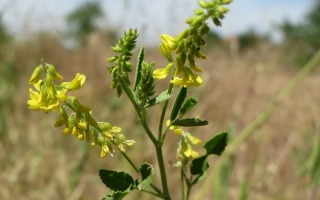
The white clover «Volzhainin» (Melilotus albus Medik.) variety was developed by the Volga Regional Research Institute of Breeding and Seed Production named after P.N. Konstantinov in the Samara region through free cross-pollination of VIR collection samples. It was included in the state register of breeding achievements in 2000, confirming its stable characteristics and wide recognition among agronomists.
Volzhainin is a biennial legume plant with an upright bush, a non-lignified stem of medium coarseness. The vegetative period lasts 45–50 days from the start of regrowth to the first mowing and 90–100 days to full seed maturity. The bush typically has 2–4 stems measuring 165–250 cm in length and 5–7 mm in thickness. Pods are elliptical, single-seeded or two-seeded, dark gray in color with a reticulated surface. Seeds are oval, yellow, 1–1.5 mm long, about 1 mm wide; 1000 seeds weigh 1.5–1.7 g.
The forage properties of the variety are high: protein content in green mass reaches 16.4%, and cellulose content – 28.3%. Green mass yield is 28–40 tons/ha, hay – 8–12 tons/ha, and seeds – from 0.3 to 0.5 tons/ha. Clover «Volzhainin» is widely used as pasture grass, green supplement, and for making hay, silage, haylage, and grass meal.
The variety is distinguished by good honey production and the ability to reclaim saline soils. It is resistant to abiotic factors, including spring and late spring frosts, as well as moderate susceptibility to powdery mildew. Overall, «Volzhainin» represents a reliable and productive option for agricultural use, combining high forage value with resistance to adverse conditions.
Volzhainin is a biennial legume plant with an upright bush, a non-lignified stem of medium coarseness. The vegetative period lasts 45–50 days from the start of regrowth to the first mowing and 90–100 days to full seed maturity. The bush typically has 2–4 stems measuring 165–250 cm in length and 5–7 mm in thickness. Pods are elliptical, single-seeded or two-seeded, dark gray in color with a reticulated surface. Seeds are oval, yellow, 1–1.5 mm long, about 1 mm wide; 1000 seeds weigh 1.5–1.7 g.
The forage properties of the variety are high: protein content in green mass reaches 16.4%, and cellulose content – 28.3%. Green mass yield is 28–40 tons/ha, hay – 8–12 tons/ha, and seeds – from 0.3 to 0.5 tons/ha. Clover «Volzhainin» is widely used as pasture grass, green supplement, and for making hay, silage, haylage, and grass meal.
The variety is distinguished by good honey production and the ability to reclaim saline soils. It is resistant to abiotic factors, including spring and late spring frosts, as well as moderate susceptibility to powdery mildew. Overall, «Volzhainin» represents a reliable and productive option for agricultural use, combining high forage value with resistance to adverse conditions.
Crop & resistance
Crop
Disease resistance
Specifications hover over for a hint about the specification
|
Type
Type
Galia (Galia) type — relatively new, of Israeli origin, although there are indications that this variety may originate from Spain. The fruits of this type are round or oval, weighing about 1 kg. The surface is smooth, covered with a delicate, connected netting, turning yellow whe... |
|
|---|---|
| Usage | |
| Registration year | 2004 |
| Catalog | Catalog → Sweet Clover |
| Legal data |
Show · 7
|
| Country | Russia |
Store offers
Prices are updated on loadLoading offers…
Available at: 1semena
Aggregator catalog: prices are collected automatically from store websites, normalized by AI and converted at the current exchange rate. Before ordering, confirm the price and availability on the store's website. This block is not indexed by search engines — the data is loaded after the page opens.
Not yet комментариев. Be the first!
Alternatives
Sweet Clover · similar varieties





See also
Often considered together with this variety






Recently viewed
Products you’ve viewed on this site
Reviews · 0