


Prices in stores
No offers yet — stores have not added prices for this product yet.
Similar varieties with prices
-
TRIO 02LLC 'BETASEM'
from 0.31 €
-
 LINEAR MS 05May Day Sugar Beet SCS
from 3.42 €
LINEAR MS 05May Day Sugar Beet SCS
from 3.42 €
-
 Sugar BeetMARIBO SEED
from 1.68 €
Sugar BeetMARIBO SEED
from 1.68 €
-
 AKAZIA KWSKWS
from 3.65 €per 1 kg
AKAZIA KWSKWS
from 3.65 €per 1 kg
Direction Type
Normal-sugar type (NZ)
Root vegetable: size
Large
Root: shape
Broadly conical
Sugar Content
16-17%
Your mark
0 votes
0% positive ratings
About product
A reliable sugar beet variety with high Cercospora resistance and stable sugar accumulation of up to 17%.
Description
A Stable Harvest in High-Risk Zones: The «Karat» Sugar Beet Variety
The «Karat» sugar beet variety, developed by the Pervomayskaya Breeding Station, is a prime example of how local selection adapts to challenging phytosanitary conditions. When fields are exposed to aggressive fungal pressures, resistance to Cercospora becomes more than just a desired trait—it is the economic foundation of your harvest.
«Karat» belongs to the normal (NZ) productivity type, making it a balanced choice for farmers who do not want to sacrifice root weight for sugar content, or vice-versa. The main focus here is on achieving a stable, middle-ground performance.
Agronomic Profile and Morphology
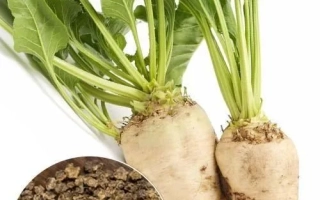
- Root: Features a large size and a distinctive broad-conical shape. This geometry facilitates mechanized harvesting, significantly minimizing losses during the lifting process.
- Technological Indicators: Sugar content typically ranges between 16-17%. This provides consistent quality for processing facilities.
- Phytosanitary Resistance: The key advantage is its pronounced tolerance to Cercospora. This allows growers to reduce the number of fungicide applications, effectively lowering production costs.
Who should consider this variety? «Karat» is ideal for operations located in regions with high risks of leaf fungal pathogens. It is predictable in its development and does not require complex or hyper-specific agronomic interventions. It is a reliable choice for those prioritizing overall yield alongside high sugar accumulation.
It is important to remember that, like any NZ-type variety, «Karat» requires proper crop rotation and quality fertilization. While it possesses inherent disease resistance, the full potential of its large roots is only unlocked with adequate moisture and nitrogen management. If your goal is a predictable harvest with high technological value and reduced pesticide costs, the Pervomayskaya Breeding Station has provided an effective tool for your fields.
Crop & resistance
Crop
Disease resistance
Specifications
| Direction Type | |
|---|---|
| Root vegetable: size | |
| Root: shape | |
| Sugar Content | 16-17% |
| Registration year | 2018 |
| Catalog | Catalog → Sugar Beet |
| Manufacturer | May Day Sugar Beet SCS |
| Legal data |
Show · 1 |
| Country | Russia |
No reviews yet. Be the first to share your experience.
Alternatives
Sugar beet seeds · similar varieties






See also
Often considered together with this variety




Recently viewed
Products you’ve viewed on this site
Reviews