

SKU #60831
·
37 views
C 2269 F
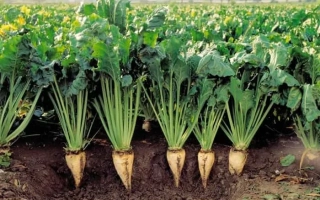
Sugar Beet
SESVANDERHAVE NV/SAUser rating
0 votes0% positive reviews
No ratings yet — be the first.
Direction Type
Normal-sugar type (NZ)
Root vegetable; size
Medium
Root; shape
Oval-conical
Sugar Content
17-18%
About product

A reliable choice for consistent sugar yields under heavy Cercospora and Powdery Mildew pressure.
Direction Type
Normal-sugar type (NZ)
Root vegetable; size
Medium
Root; shape
Oval-conical
Sugar Content
17-18%
Description
Yield stability in high-pressure disease zones
Selecting a sugar beet hybrid often involves balancing sugar content against disease resistance. С 2269 Ф, developed by Sesvanderhave Nv/Sa, is engineered for farmers who prioritize yield security even under significant pathogen pressure. Classified as a Normal-Sugar (NZ) type, this hybrid offers robust adaptability across various soil and climatic conditions.
Protective potential and productivity
The standout feature of this hybrid is its proven resistance to leaf diseases. While Cercospora and Powdery Mildew can rapidly deplete leaf surface area, С 2269 Ф maintains a healthy canopy through to harvest. This sustained photosynthetic activity is crucial for sugar accumulation, which sits consistently between 17-18%.
- Root characteristics: The oval-conical, medium-sized root is designed for efficient mechanical harvesting, minimizing root damage and soil tare.
- Sowing recommendations: To unlock the full genetic potential of the hybrid, an optimal stand density of 80,000–90,000 plants per hectare is recommended.
Why choose this hybrid?
С 2269 Ф is an ideal candidate for agricultural operations in regions prone to fungal outbreaks. It allows for a more efficient fungicide management program, reducing the need for aggressive late-season applications without sacrificing tonnage. By integrating superior Belgian breeding from Sesvanderhave, this hybrid offers high germination energy and excellent crop uniformity, ensuring a strong start and a predictable end-of-season result.
Crop & resistance
Crop
Disease resistance
Specifications hover over for a hint about the specification
| Direction Type | |
|---|---|
| Root vegetable; size | |
|
Root; shape
Root; shape
Roots can be round, elongated-round, cylindrical, conical. |
|
| Sugar Content | 17-18% |
|
Recommended Density
Recommended Density
Optimal productivity is achieved at a planting density of 4000-5500 plants/ha. Possible planting scheme: 300-500x40-80 cm. |
80-90 thous. pcs/ha |
| Registration year | 2014 |
| Catalog | Catalog → Sugar Beet |
| Manufacturer | SESVANDERHAVE NV/SA |
| Legal data |
Show · 1
|
| Country | Belgium |
Store offers
Prices are updated on loadLoading offers…
Aggregator catalog: prices are collected automatically from store websites, normalized by AI and converted at the current exchange rate. Before ordering, confirm the price and availability on the store's website. This block is not indexed by search engines — the data is loaded after the page opens.
Not yet комментариев. Be the first!
Alternatives
Sugar beet seeds · similar varieties





See also
Often considered together with this variety




Recently viewed
Products you’ve viewed on this site
Reviews · 0