


SKU #66274
·
32 views
Sorghum KSS 19
Sorghum
PMS INDUSTRIES S. A.User rating
0 votes0% positive reviews
No ratings yet — be the first.
Direction
Grain
Vegetation Period
90-100 days
Grain; Color
White
Grain; Starch Content
70-80%
About product

KSS 19 is an early-maturing grain sorghum (Sorghum bicolor) variety intended for use as a forage crop. It is characterized by high yield and good adaptation to various climatic conditions, including northern and central regions of Russia. The plant is of medium height with little to no anthocyanin pigmentation in seedlings and stigmas, indicating its resistance to adverse factors. The vegetative p…
Direction
Grain
Vegetation Period
90-100 days
Grain; Color
White
Grain; Starch Content
70-80%
Description
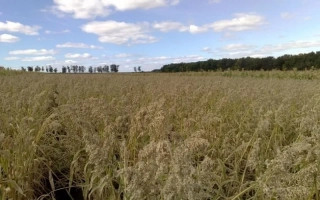
KSS 19 is an early-maturing grain sorghum (Sorghum bicolor) variety intended for use as a forage crop. It is characterized by high yield and good adaptation to various climatic conditions, including northern and central regions of Russia. The plant is of medium height with little to no anthocyanin pigmentation in seedlings and stigmas, indicating its resistance to adverse factors. The vegetative period from germination to full maturity is about 97 days, allowing for a quick harvest.
The panicle of this variety is symmetrical, of medium length and density, with a short or medium-length neck. Glume cover is light brown and of medium length. The grain is round, white or light yellow, with a starchy endosperm, which ensures high energy and protein content, important for livestock feeding. The mass of 1000 grains varies between 22.3–32.1 grams depending on the growing region.
The KSS 19 variety shows high yields in various regions, including the North Caucasus and Lower Volga. Average yield ranges from 19.9 to 30.0 centners per hectare, with maximum indicators reaching up to 78.4 centners per hectare, making it profitable for agricultural production. Thanks to its frost resistance and adaptability, KSS 19 is a reliable choice for forage production in diverse climatic conditions.
The panicle of this variety is symmetrical, of medium length and density, with a short or medium-length neck. Glume cover is light brown and of medium length. The grain is round, white or light yellow, with a starchy endosperm, which ensures high energy and protein content, important for livestock feeding. The mass of 1000 grains varies between 22.3–32.1 grams depending on the growing region.
The KSS 19 variety shows high yields in various regions, including the North Caucasus and Lower Volga. Average yield ranges from 19.9 to 30.0 centners per hectare, with maximum indicators reaching up to 78.4 centners per hectare, making it profitable for agricultural production. Thanks to its frost resistance and adaptability, KSS 19 is a reliable choice for forage production in diverse climatic conditions.
Crop & resistance
Crop
Disease resistance
Specifications hover over for a hint about the specification
|
Direction
Direction
Existing varieties and types of cabbage are grown for fresh consumption, long-term storage, and technical processing. |
|
|---|---|
| Vegetation Period | 90-100 days |
| Grain; Color | |
| Grain; Starch Content | 70-80% |
| Grain; Tannin Content | |
| Registration year | 2013 |
| Catalog | Catalog → Sorghum |
| Manufacturer | PMS INDUSTRIES S. A. |
| Legal data |
Show · 1
|
| Country | France |
Store offers
Prices are updated on loadLoading offers…
Aggregator catalog: prices are collected automatically from store websites, normalized by AI and converted at the current exchange rate. Before ordering, confirm the price and availability on the store's website. This block is not indexed by search engines — the data is loaded after the page opens.
Not yet комментариев. Be the first!
Alternatives
Sorghum seeds · similar varieties





See also
Often considered together with this variety





Recently viewed
Products you’ve viewed on this site
Reviews · 0