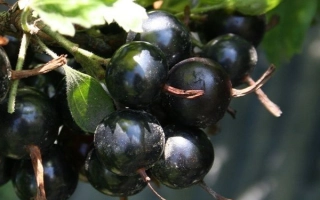
The Valentine currant variety represents a vigorous bush of medium density with straight light-brown shoots without pubescence. The leaves are three-lobed, with deep incisions, of medium size, and green in color. Their surface is matte, leathery, and smooth, with blunt short teeth. The berries are oval-shaped, medium size around 1 gram, have a black color, a dense skin of medium thickness, and juicy pulp. The taste of the berries is sweet and sour, delicate and refreshing with a pleasant aroma, which is confirmed by a tasting score of 4.4 points. The berries contain 11.9% sugar, 1.0% acid, 29.1 mg% vitamin C, and 11.1 mg% carotene.
This currant variety is characterized by high winter hardiness, as well as drought and heat resistance, which allows it to be grown in various climatic conditions. Valentine also shows good resistance to most pests and diseases, which reduces the need for frequent use of protective agents. Successful fruiting requires pollination with other varieties of golden currants.
Valentina currant is widely used in horticulture due to its high yield and excellent taste qualities. Medium-sized bushes not only produce abundant crops but also possess decorative properties, making them attractive for cultivation in home gardens. With proper planting and adherence to agrotechnical recommendations, the culture will steadily delight gardeners with generous fruits.