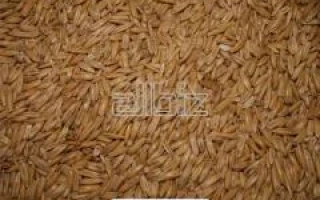
Rice variety Ukraine 96 is a specialized variety recommended for cultivation in the steppe regions of Ukraine. It was registered in 2001 and developed by the Institute of Rice of the Ukrainian Academy of Agricultural Sciences. This variety is distinguished by its adaptation to local climatic conditions and soils, ensuring stable yields on steppe lands. Ukraine 96 is part of a series of varieties used in the country, among which Fagot, Chervonyi, Consul, and others are also well known.
As an agricultural crop, rice has significant economic importance due to its wide range of applications. In addition to use in the food industry, rice serves as raw material for the production of grits, flour, starch, vegetable oil, and pharmaceuticals. For successful rice cultivation, specific agrotechnical conditions are required: fertile soils with slightly acidic reaction, high humidity, field flooding, as well as proper fertilization and soil treatment. Rice is a warm-loving crop, requiring careful adherence to agrotechnologies to achieve high yields.
In Ukraine, rice is primarily grown in the southern regions, where the climate and soil conditions are favorable for this crop. Although rice is traditionally associated with tropical Asian countries, rice farming in Ukraine has a history of over a century and significant potential for development. The Bessarabia region is one of the centers of rice cultivation, where modern technologies and agrotechniques are applied. The Ukraine 96 variety, due to its adaptation to steppe conditions, plays an important role in ensuring food security and developing the agricultural sector of the country.