


SKU #4107
·
328 views
Quince Collective
Quince
User rating
0 votes0% positive reviews
No ratings yet — be the first.
Assignment
Industrial Processing
Type of Sort
Sort
Usage Group
Technical
Flavor
Sour-sweet
About product

Variety selected at the Volgograd Experimental Station of VIR (Early Maslyanka Ch Rea). Undergoing field trials in Astrakhan and Volgograd regions. Valuable for industrial and home orchards in the Lower Volga region.
Tree bushy, multi-stemmed (4-6 stems), medium height, with flat-round crown.
Shoots medium, olive-yellow, slightly knotted. Leaves large, oval-egg-shaped, dark green, entire,…
Assignment
Industrial Processing
Type of Sort
Sort
Usage Group
Technical
Flavor
Sour-sweet
Description
Variety selected at the Volgograd Experimental Station of VIR (Early Maslyanka Ch Rea). Undergoing field trials in Astrakhan and Volgograd regions. Valuable for industrial and home orchards in the Lower Volga region.
Tree bushy, multi-stemmed (4-6 stems), medium height, with flat-round crown.
Shoots medium, olive-yellow, slightly knotted. Leaves large, oval-egg-shaped, dark green, entire, with short petioles. Stipules small, lanceolate.
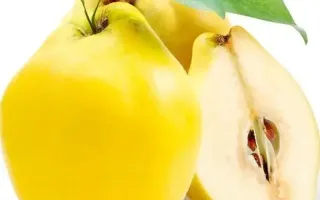
Fruits above average size (average weight 270 g), round-apple-shaped, with slight conical tapering to apex. Slightly ribbed, hairy. Main color — bright yellow. Calyx half-open, large. Subcalyx tube short, cup-shaped. Heart small, onion-like. Seed chambers closed.
Flesh light-yellow, dense, juicy, very aromatic, sour-sweet, slightly astringent flavor. Few stone cells, mostly around the heart.
Chemical composition of fruits: dry matter average 19.1% (max 22.0%), total sugars — 8.6% (11.3%), titratable acids — 0.84% (1.27%), sugar-to-acid ratio — 10.7 (15.1), ascorbic acid — 13.9 mg/100g (22.4), P-active substances (catechins) — 232 mg/100g (102-356), flavonols — 68 mg/100g (31-104), total phenolic compounds — 877 mg/100g (685-1180), pectin substances — 1.18% (0.57-1.86%) on fresh weight.
Fruits ripen at end of September, store up to 120 days, intended for processing. Technological evaluation: compote 4.5 points, jam 4.7 points.
Best pollinators: Krasnoslobodskaya, Non-Begi. Fruit production begins on 3rd-4th year. Good, regular yields.
Advantages of variety: good winter hardiness, high and regular yield, excellent fruit commercial and technological qualities, long storage period.
Disadvantages of variety: in some years fruits may crack on the tree before harvest, significantly reducing their storage quality.
Interesting as a source for selection of superior fruit commercial and technological qualities. Used in breeding. At the Volgograd Experimental Station of VIR, several large-fruited hybrids with high fruit quality were developed using this variety.
Crop & resistance
Crop
Specifications hover over for a hint about the specification
| Assignment | |
|---|---|
| Type of Sort | |
| Usage Group | |
| Flavor | |
|
Fruit Color
Fruit Color
The fruit color of tomato varieties is influenced by the combination of skin and flesh color. Some varieties have transparent skin, others — yellow. When combined differently, the fruits can acquire quite diverse colors. The fruit color is affected by pigments (lycopene) and thei... |
|
| Meat Texture Consistency | |
| Height and shape of the tree | |
| Cold Resistance | |
| Laziness | |
| Features | |
| Catalog | Catalog → Quince |
Store offers
Prices are updated on loadLoading offers…
Aggregator catalog: prices are collected automatically from store websites, normalized by AI and converted at the current exchange rate. Before ordering, confirm the price and availability on the store's website. This block is not indexed by search engines — the data is loaded after the page opens.
Not yet комментариев. Be the first!


See also
Often considered together with this variety




Recently viewed
Products you’ve viewed on this site
Reviews · 0