


SKU #46056
·
80 views
Cabernet Sauvignon
Grape
User rating
0 votes0% positive reviews
No ratings yet — be the first.
Usage Group
Technical
Ripening Period
Mid-late
Resistance to Mildew
High
Resistance to Gray Mold
High
Prices in stores
from2.01 €per seedling
pack from 2.01 € per pack
4 offers from 4 stores
Store offers · 4 from 4 stores
Prices are updated on loadLoading offers…
Available at: Fitosad · Олегів сад · Райська Долина · Saduua
Aggregator catalog: prices are collected automatically from store websites, normalized by AI and converted at the current exchange rate. Before ordering, confirm the price and availability on the store's website. This block is not indexed by search engines — the data is loaded after the page opens.
About product

Cabernet Sauvignon — one of the most popular technical grape varieties, belonging to the mid-late ripening period. This French variety is the result of crossing Cabernet and Sauvignon. The plant's leaves are five-lobed, medium-sized, and the clusters have a cylindrical-conical shape, measuring 12-15 cm in length and 7-8 cm in width, with a loose structure. The average cluster weight is about 73-78…
Usage Group
Technical
Ripening Period
Mid-late
Resistance to Mildew
High
Resistance to Gray Mold
High
Description
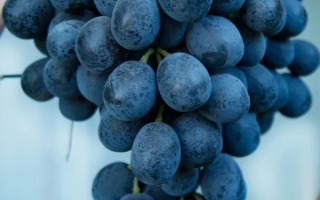
Cabernet Sauvignon — one of the most popular technical grape varieties, belonging to the mid-late ripening period. This French variety is the result of crossing Cabernet and Sauvignon. The plant's leaves are five-lobed, medium-sized, and the clusters have a cylindrical-conical shape, measuring 12-15 cm in length and 7-8 cm in width, with a loose structure. The average cluster weight is about 73-78 grams, and the berries are round, 13-15 mm in diameter, dark blue in color with a dense waxy coating. The berry skin is thick and rough, while the pulp is juicy with almost colorless juice. The flavor is harmonious with a slight hint of blackcurrant, which is a characteristic feature of this variety. Cabernet Sauvignon is widely used for producing premium red table wines and is also part of blends for manufacturing high-quality champagne base wines. Thanks to its good sugar accumulation and increased resistance to diseases such as gray rot and mildew, this variety is well-suited for winemaking in various climatic conditions. In Bordeaux, it is traditionally blended with Merlot and Cabernet Franc, and is successfully grown in warm regions such as Chile and northern California. The period from budbreak to technical ripeness for table wines is about 143 days, and for dessert wines — about 165 days. The average weight of 100 berries varies from 80 to 120 grams, with each berry containing one to three seeds. The cluster stem reaches up to 7 cm, facilitating harvest. Due to its characteristics and qualities, Cabernet Sauvignon is a sought-after variety for grape growers and winemakers, ensuring high product quality.
Video · 10 videos
Suggest a video →Crop & resistance
Crop
Disease resistance
Specifications hover over for a hint about the specification
| Usage Group | |
|---|---|
|
Ripening Period
Ripening Period
It takes 70-100 days until pepper reaches flowering stage, 130-160 days until technical fruit ripeness, and 135-180 days until physiological ripeness. |
Mid-late |
| Resistance to Mildew | |
| Resistance to Gray Mold | |
| Bunch Size | Small (up to 300 g) |
| Berry Size | Medium (2–5 g) |
| Berry Color | |
| Flavor | |
| Zoning | |
| Assignment | |
| Features | |
| Registration year | 1962 |
| Catalog | Catalog → Grape |
| Country | Ukraine |
Not yet комментариев. Be the first!
Alternatives
Grapevine saplings · similar varieties


TEACHER'S MEMORY
ФГБОУ ВО Омский государственный аграрный университет имени П.А. Столыпина
063 8 offers
2.4 €per seedling ≈ 124 ₴

See also
Often considered together with this variety





Recently viewed
Products you’ve viewed on this site
Reviews · 0