


SKU #4108
·
500 views
Krasnodar Large-fruited
Quince
User rating
0 votes0% positive reviews
No ratings yet — be the first.
Assignment
Preservation
Type of Sort
Sort
Usage Group
Universal
Flavor
Sour-sweet
Store offers · 1 from 1 stores
Prices are updated on loadLoading offers…
Available at: Сады Семирамиды
Aggregator catalog: prices are collected automatically from store websites, normalized by AI and converted at the current exchange rate. Before ordering, confirm the price and availability on the store's website. This block is not indexed by search engines — the data is loaded after the page opens.
About product

This variety was selected at the Fruit Growing Department of Kuban Agricultural Institute from local quince forms. It is widespread in the North Caucasus region; it was officially tested and approved in the Krasnodar region. Medium-sized tree, with a spherical, slightly drooping, dense crown; good leafing, branch angles close to 90°, thick branches with slight knuckles; trunk slightly twisted,…
Assignment
Preservation
Type of Sort
Sort
Usage Group
Universal
Flavor
Sour-sweet
Description
This variety was selected at the Fruit Growing Department of Kuban Agricultural Institute from local quince forms. It is widespread in the North Caucasus region; it was officially tested and approved in the Krasnodar region.
Medium-sized tree, with a spherical, slightly drooping, dense crown; good leafing, branch angles close to 90°, thick branches with slight knuckles; trunk slightly twisted, gray bark, small brown lenticels.
Branches are thick, slightly knuckled, dark green, weakly hairy, with medium internodes. Leaves are large, symmetrical, strongly indented along the central vein with bumps and depressions. Leaf shape is egg-shaped with slight narrowing at the tip; petiole is long and thick, weakly colored, stipules are small and narrow.
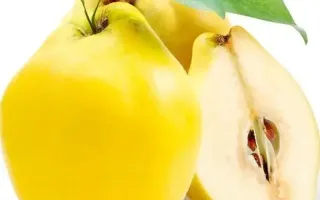
Fruits are large (average weight 380 g) and very large, pear-shaped, strongly ribbed and bumpy; weak, fine hairs that easily rub off during ripening; orange-yellow color, smooth, oily skin; closed calyx, closely fused sepals, medium size. The receptacle is narrow, deep, strongly ribbed, and wrinkled. The depression has a slight protrusion, slightly rusted, and the fruiting is abundant. The core is bulbous and large, seed chambers are closed, walls are finely wrinkled. Seeds are small, pointed, light brown.
Flesh is creamy, firm, juicy, with a slightly sweet taste and moderate aroma, free of bitterness. Fruits contain 12.9% dry matter, 7.5% sugars, and 0.57% titratable acids.
Autumn-ripening variety, suitable for both canning and table use.
Begins fruiting on the 3rd-4th year. Average yield according to data from Ust-Labinsk State Agricultural University: 218.9 centners per hectare. Distinguished by good winter hardiness, resistance to fungal leaf diseases, and only slightly affected by fruit rot in years with unfavorable climatic conditions.
Advantages of the variety: early fruiting, winter hardiness.
Disadvantages of the variety: susceptibility to fruit rot in certain years.
Crop & resistance
Crop
Specifications hover over for a hint about the specification
| Assignment | |
|---|---|
| Type of Sort | |
| Usage Group | |
| Flavor | |
|
Fruit Color
Fruit Color
The fruit color of tomato varieties is influenced by the combination of skin and flesh color. Some varieties have transparent skin, others — yellow. When combined differently, the fruits can acquire quite diverse colors. The fruit color is affected by pigments (lycopene) and thei... |
|
| Meat Texture Consistency | |
| Height and shape of the tree | |
| Disease Resistance | |
| Cold Resistance | |
| Features | |
| Catalog | Catalog → Quince |
Not yet комментариев. Be the first!


See also
Often considered together with this variety




Recently viewed
Products you’ve viewed on this site
Reviews · 0