Description
Sowing dates
Propagation is typically achieved through vegetative methods such as grafting or budding on clonal rootstocks, as growing from seed does not ensure the uniformity of the parent traits.
When planting, ensure the site is prepared with adequate organic matter to provide a steady supply of nutrients, especially during the establishment phase of the young tree.
Planting should be done in early spring or late autumn depending on local frost dates. Proper spacing is essential, usually 4 to 5 meters apart, to allow for sufficient air circulation.
Digging a deep planting pit helps break up subsoil and provides room for roots to expand, ensuring better water uptake and tree stability in the long term.
Immediately after planting, a deep irrigation is required to settle the soil around the roots, followed by a layer of organic mulch to regulate temperature.
Growing requirements
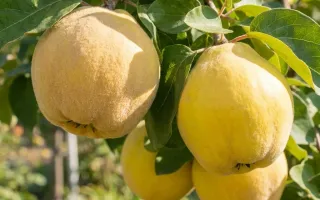
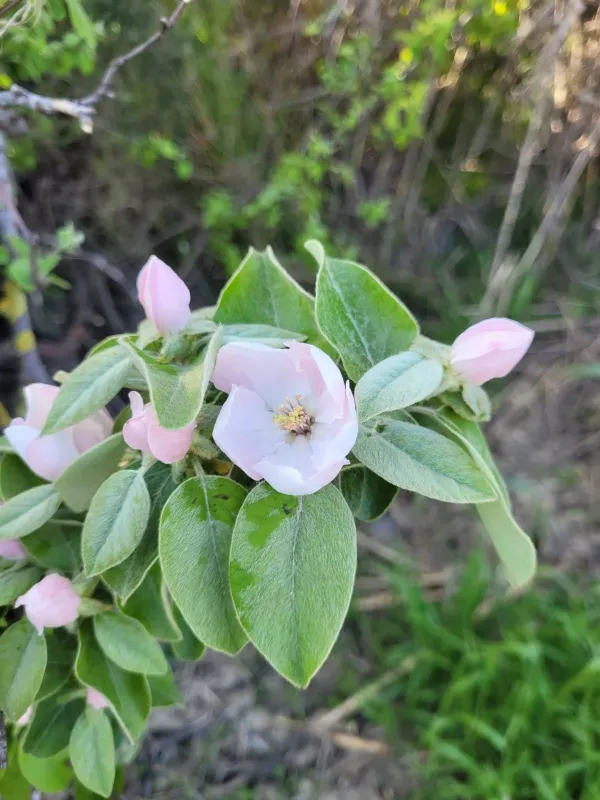
Quince (Cydonia oblonga Mill.) is a deciduous fruit tree belonging to the Rosaceae family. Originating from the Caucasus and parts of Central Asia, it is a hardy plant known for its hard, aromatic, and nutrient-dense fruit.
The tree thrives in warm, temperate climates and requires a long growing season to fully ripen its fruit. It prefers full sun exposure, which is critical for both optimal fruit development and disease prevention.
Regarding soil preferences, quince adapts well to various types but performs best in deep, well-drained, fertile loamy or alluvial soils with slightly acidic to neutral pH levels.
Botanically, the tree is characterized by simple, alternate, entire leaves with a dense, white-gray pubescence on the underside, which helps the tree conserve water in arid conditions.
The tree's versatility allows it to serve as a high-quality rootstock for pears, providing better drought tolerance and structural stability for the scion variety.
Yield
Quince trees generally start producing fruit around the third or fourth year after planting, reaching their peak yield potential within a decade of establishment.
Under optimal orchard management, a mature tree can produce a substantial harvest, making it a reliable crop for both home gardens and small-scale commercial operations.
Fruit set can be influenced by early spring frosts, which can damage blossoms, so choosing a planting site that is not in a frost pocket is crucial for consistent yields.
Thinning the fruit is sometimes necessary to ensure that the remaining specimens grow to a good size and to prevent branch breakage due to excessive weight.
Proper water management is the most critical factor for fruit quality; ensuring sufficient hydration during the summer months results in larger and juicier fruits.
Main diseases and pests
Fire blight (Erwinia amylovora) is the most serious disease affecting quince, potentially causing significant dieback of branches and requiring rapid removal of infected tissue.
Brown rot (Monilinia spp.) often affects the fruit during humid conditions, leading to soft rot and mummification if not controlled through sanitation and fungicide applications.
Codling moth is a common pest that burrows into the fruit, causing significant damage and reducing the marketability of the crop significantly.
Leaf spots, including those caused by Diplocarpon mespili, can lead to premature leaf drop, which weakens the tree's ability to store energy for the following season.
- Sanitary pruning of infected parts.
- Appropriate chemical treatment schedules.
- Removing fallen debris to reduce inoculum.
Harvesting
Harvesting usually occurs in late autumn when the fruit has changed from green to a distinct golden-yellow color and has developed a strong, pleasant aroma.
Since the fruit is prone to bruising, it must be picked carefully by hand. It is essential to handle the fruit gently to maintain the protective fuzz on its skin.
After picking, the fruit is stored in cool, airy conditions. Quince should not be stored with other delicate fruits as it has a very potent aroma that can be absorbed by other produce.
Some growers prefer to harvest slightly before full maturity to allow the fruit to finish ripening in storage, which can sometimes result in a better texture for processing.
Correct storage conditions (low temperatures and high humidity) can extend the shelf life of quince, allowing for utilization well into the winter months for cooking and preserving.
Content graph
Connections · Quince
Most often together:
Marketplace
Products · 26