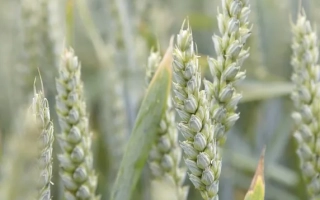
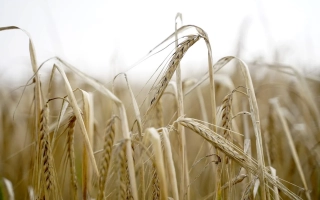
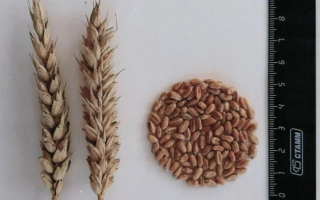
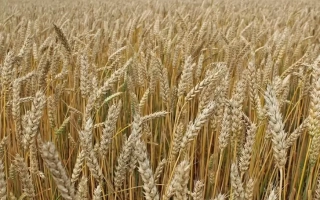
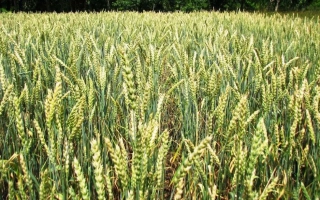
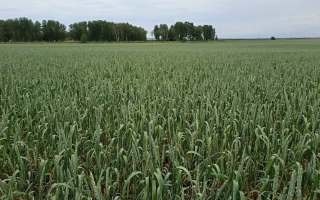
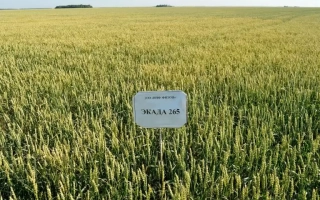
Tulun Dawn is a variety of soft spring wheat (Triticum aestivum L.), characterized by early maturity with a vegetative period of 75-83 days, allowing it to mature 3-9 days earlier than other registered varieties. The variety is included in the State Register for the Ural, Western Siberia, and Eastern Siberia regions and recommended for cultivation in the Altai Territory, the Republic of Altai, Novosibirsk, Tyumen, and Kurgan regions. The plant has a semi-erect bush, weakly expressed straw with strong hairiness on the upper node, and a flag leaf covered with a strong waxy bloom. The head is cylindrical, medium density, white in color, with a straight medium-width shoulder and a short straight beak. The grain is egg-shaped, colored, with a short awn; 1000-grain mass is 34-36 grams.
The variety is distinguished by good lodging resistance and moderate drought tolerance, making it a reliable choice for various climatic conditions. Yield of Tulun Dawn varies by region: in the Western Siberia region, average yield is 25.8 centners/ha, in the Ural region it is 28.5 centners/ha, and in Novosibirsk region it reaches from 28 to 38 centners/ha with an increase over the standard Novosibirsk 22 of 1 to 3 centners/ha. Maximum registered yield reached 51 centners/ha.
Bread-making qualities of the variety are excellent, making it in demand for the production of high-quality flour and bakery products. At the same time, Tulun Dawn has moderate susceptibility to hard head smut and strong susceptibility to brown and stem rust, as well as powdery mildew. Despite this, the variety maintains high productivity and grain quality, confirming its status as a strong wheat suitable for intensive agriculture.