

SKU #59585
·
40 views
BEISKAYA
Wheat
User rating
0 votes0% positive reviews
No ratings yet — be the first.
Type of Development
Spring wheat
Wheat Type
Soft wheat variety
Registration year
2023
About product

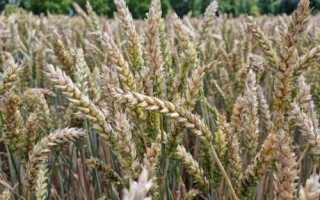
Reliable spring soft wheat with robust natural immunity against fungal pathogens.
Type of Development
Spring wheat
Wheat Type
Soft wheat variety
Registration year
2023
Description
Yield stability in demanding conditions
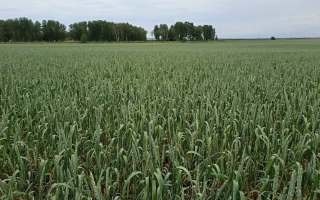
When working with 'Beyskaya' spring soft wheat, the focus is on reliability. Developed by the Krasnoyarsk Scientific Center SB RAS, this variety is designed for consistent grain production under challenging agricultural conditions. From an agronomist's perspective, the key indicator of success is the plant's health and its ability to withstand environmental pressures.
Phytosanitary management
The primary concern in spring wheat cultivation is fungal infection. 'Beyskaya' exhibits strong natural resistance to leaf rust. In high-moisture scenarios, where pathogen risk typically spikes, this variety maintains its integrity, allowing for standard fungicide protocols without the need for unplanned, costly emergency treatments.
- Durability: High resistance to mycosphaerella blight and brown leaf spot reduces the frequency of sprayer passes.
- Clean harvest: Resistance to head-infecting pathogens simplifies the harvest process, ensuring a high-quality, pure crop.
- Operational ease: As a soft wheat variety, it provides uniform emergence and excellent field performance during the harvest season.
Operating this variety is straightforward. It is well-adapted to climatic stress and responds efficiently to standard fertilization. For the operator, this translates to lower operational risks and predictable chemical expenditure, as the variety is resilient enough to maintain target grain quality even when minor deviations in the agro-background occur.
Crop & resistance
Crop
Disease resistance
Specifications hover over for a hint about the specification
| Type of Development | |
|---|---|
|
Wheat Type
Wheat Type
Biologically hard wheat differs from soft wheat in its greater demand for soil fertility and agronomic conditions (especially regarding field cleanliness from weeds), lower drought resistance and plasticity, relatively weaker root development, especially nodal roots, and lower ti... |
|
| Registration year | 2023 |
| Catalog | Catalog → Wheat |
| Legal data |
Show · 1 |
| Country | Russia |
Store offers
Prices are updated on loadLoading offers…
Aggregator catalog: prices are collected automatically from store websites, normalized by AI and converted at the current exchange rate. Before ordering, confirm the price and availability on the store's website. This block is not indexed by search engines — the data is loaded after the page opens.
Not yet комментариев. Be the first!
Alternatives
Wheat seeds · similar varieties






See also
Often considered together with this variety





Recently viewed
Products you’ve viewed on this site
Reviews · 0