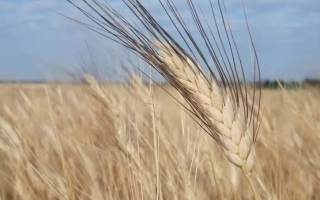
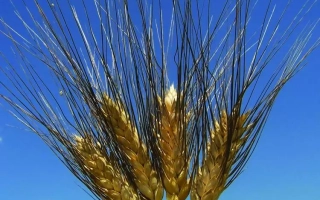
TRIADA is a variety of hard spring wheat (Triticum durum Desf.) characterized by a medium-late maturity period and a vegetative period ranging from 79 to 93 days. Plants of this variety have an average height of 48 to 96 cm depending on the growing region, short straw, and a semi-erect habit. The ear is pyramid-shaped, red in color, of medium length and density, with red, coarse, and barbed awns measuring 13–16 cm. The grain is white, semi-elongated, glassy, has high thousand-kernel weight, and lacks a beard at the base. The variety is resistant to lodging, possesses a strong waxy coating on the ear and sheath of the flag leaf, which contributes to protection against unfavorable conditions. Average yield in growing regions reaches 45 cts/ha, while the variety surpasses standard indicators, demonstrating a maximum yield of up to 89.4 cts/ha. TRIADA is recommended for cultivation in the Central Black Earth region, including the Belgorod, Kursk, Lipetsk, and Oryol regions.
The variety is distinguished by high resistance to a range of diseases, including powdery mildew, and exhibits moderate susceptibility to powdery scab. Under field conditions, weak infection by stem and brown rust is noted, although cases of strong septoria are possible. Thanks to breeding work conducted by leading research centers, TRIADA demonstrates yield stability and high grain quality, including excellent pasta-making properties and high gluten content, making it in demand for the production of pasta products.
To protect TRIADA wheat crops from a complex of diseases, the use of an innovative three-component systemic fungicide Triada containing propiconazole, tebuconazole, and epoxiconazole is recommended. This preparation has an expanded spectrum of action, effectively controls fusarium, powdery mildew, brown rust, septoria, and other diseases, providing therapeutic and prophylactic protection of crops. The fungicide is applied to spring and winter wheat, winter barley, and soybeans, consumed at a rate of 0.5-0.6 l/ha and is classified as moderately hazardous substances.